
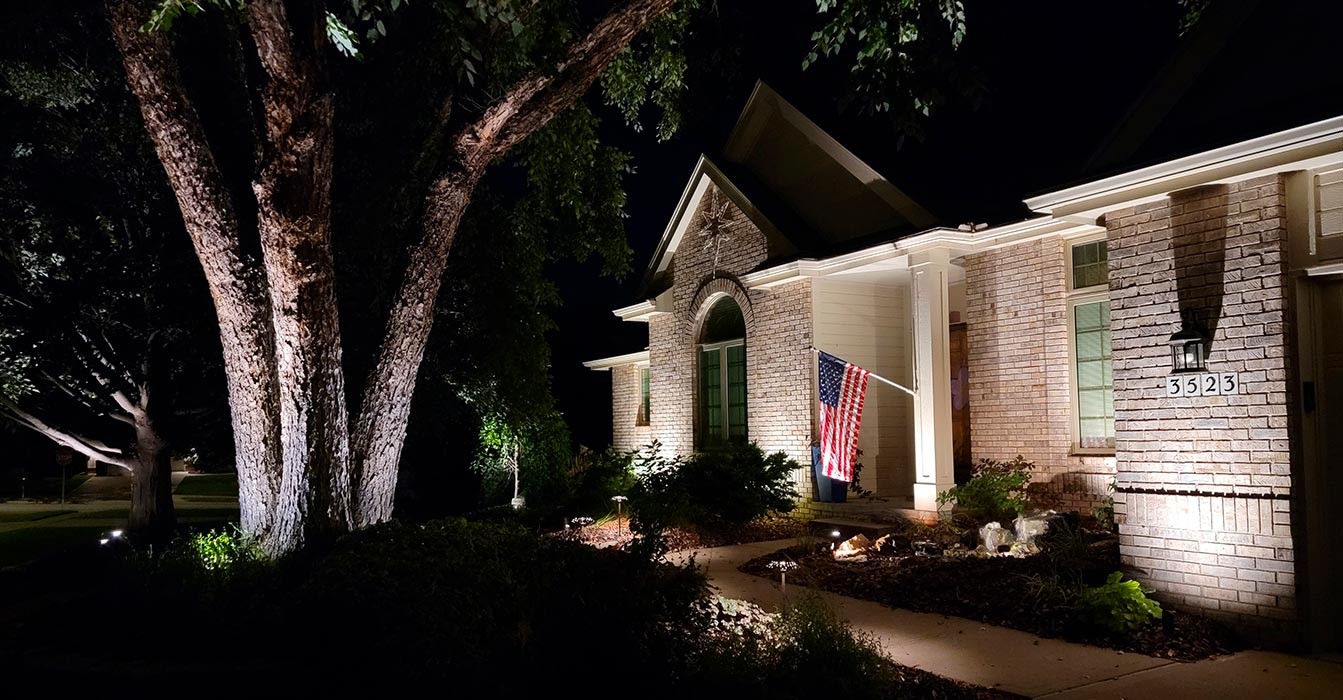
That moment when the sun dips below the horizon doesn’t have to be the end of enjoying your outdoor spaces. In fact, with thoughtful residential lighting design, it can be the beginning of a whole new experience. Imagine stepping out onto your patio to a warm, inviting glow, or watching your garden transform into a captivating nighttime scene. The right lighting isn’t just about visibility, it’s about creating ambiance, adding safety, and extending your living space far beyond the walls of your home. In other words, it’s about designing the perfect lighting for your home.
But where do you even begin to make this perfect illumination? The key lies in understanding the art of layering light. Think of it as composing a symphony, where different types of light work together in harmony to achieve the desired effect. In this blog we’ll discuss the essentials to layered lighting that will help you design a truly exceptional lighting scheme for your outdoor residence.
Layer 1: The Foundation – Ambient Lighting
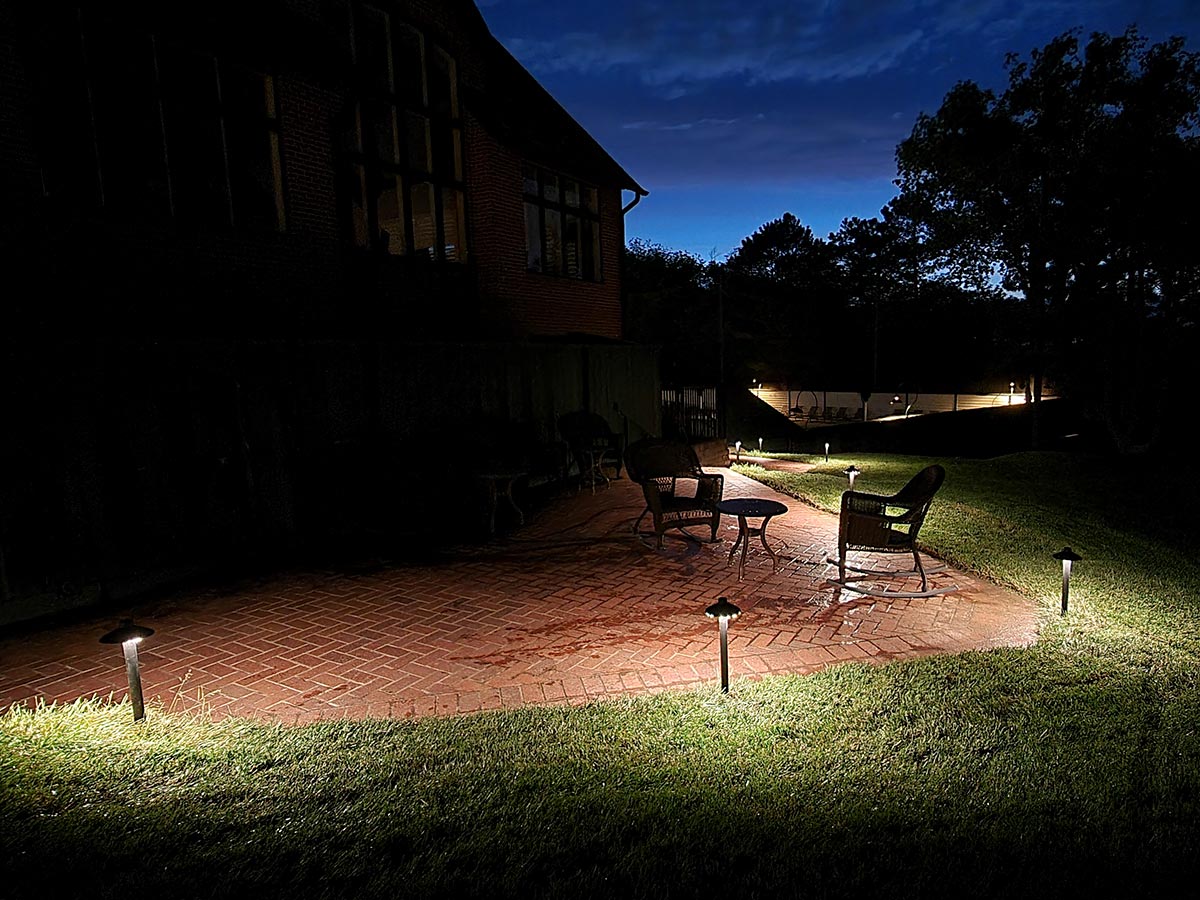
Ambient lighting provides the overall illumination for your outdoor areas. It’s the foundational layer that ensures safe navigation and sets a comfortable base level of light. Without it, your other lighting efforts would easily get lost in the darkness.
Think of these as the workhorses of your outdoor lighting:
- Porch lights: These are essential for welcoming guests and providing visibility at your entrances. Consider the style of your home when choosing fixtures.
- Pathway lights: Guiding you along walkways and driveways, these are crucial for safety. Low-level spread lights or directional path lights are popular choices among our clients.
- Subtle landscape washes: Softly illuminating larger areas like lawns or planting beds creates a gentle, even glow and prevents stark contrasts of light and shadow.
The purpose of ambient lighting is to provide a sense of security and ease of movement as you navigate your property after dark. It shouldn’t be overly bright or harsh, but rather a gentle wash that sets the stage for the other layers.
Layer 2: Illuminating Function – Task Lighting
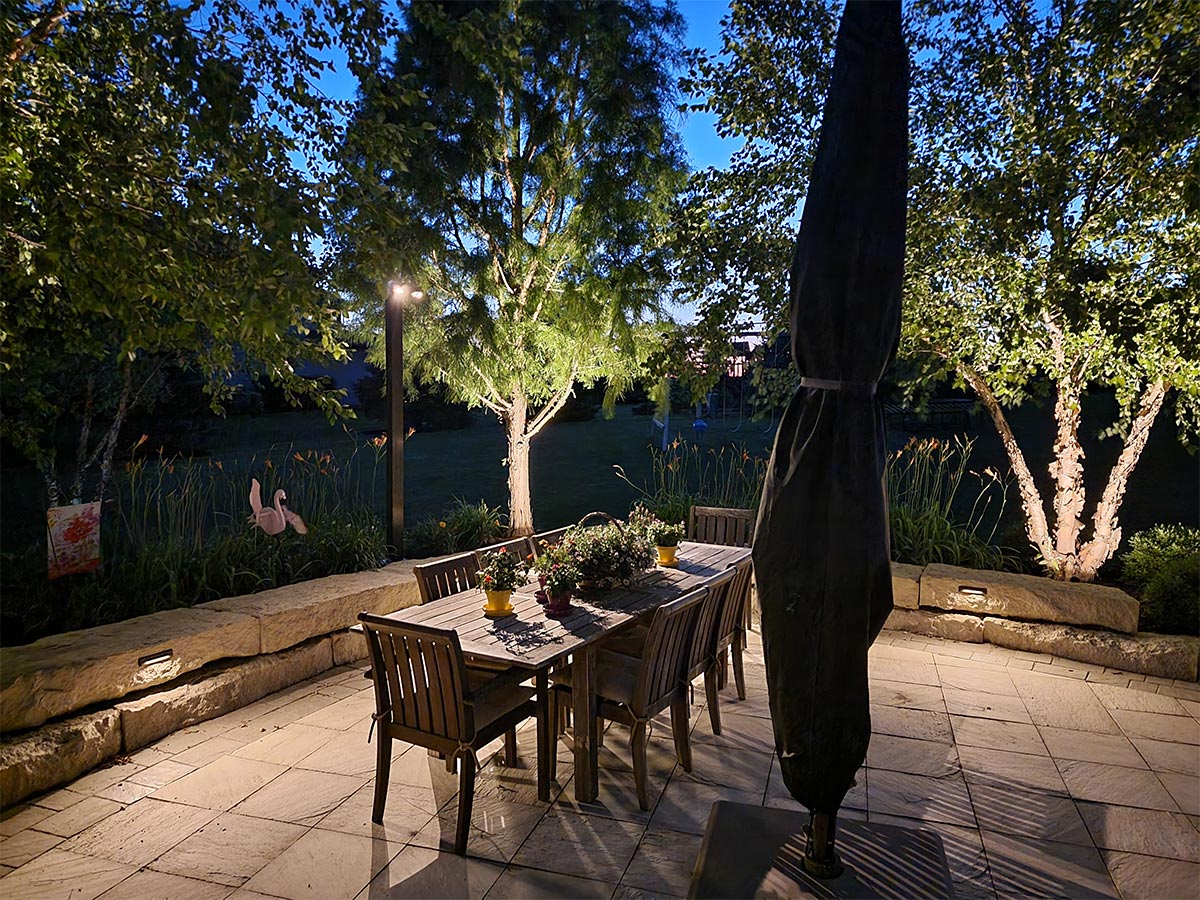
Just as you have specific lighting for reading or cooking indoors, task lighting serves a functional purpose outdoors. It focuses light on areas where you need it most for specific activities.
Consider these practical applications:
- Deck lighting: Whether it’s recessed lights in the deck floor, post cap lights, or strategically placed spotlights, task lighting ensures you can comfortably dine, socialize, or simply relax on your deck.
- Grilling areas: Focused spotlights or under-cabinet lighting (for outdoor kitchens) make it safe and easy to see what you’re cooking.
- Steps and railings: Integrated step lights or railing lights significantly improve safety in key areas and prevent trips and falls.
- Entryway lighting: Brighter lights near door locks and handles provide security and convenience.
The key to effective task lighting is directing the light exactly where it’s needed, minimizing glare and maximizing usability.

Layer 3: Highlighting Beauty – Accent Lighting
This is where the magic truly happens! Accent lighting is designed to draw attention to specific architectural features, beautiful landscaping elements, or interesting garden art. It adds depth, dimension, and personality to your home’s exterior at night. Some would say it’s the cherry on top of the cake. Here are some creative techniques that will help you discover or reinvent your home’s unique personality:
- Uplighting trees and shrubs: Placing lights at the base of plants and aiming upwards creates a dramatic and visually stunning effect, highlighting their shape and texture.
- Highlighting architectural details: Showcase unique features of your home’s exterior, such as columns, stonework, or interesting rooflines, with strategically placed spotlights.
- Illuminating garden art and water features: Bring your favorite outdoor features to life with focused lighting that illuminates the most artistic elements of your yard.
- Silhouetting: Position a light behind an object to create a dramatic and amplified silhouette against a wall or fence.
Accent lighting is all about creating visual interest and transforming your landscape into a nighttime masterpiece. It allows you to show off the elements you love most about your property at night.
Bringing It All Together: The Art of Balance
Designing the perfect residential lighting scheme is about achieving a harmonious balance between these three types of layers. You don’t want one layer to overpower the others. Instead, they should work together to create a unified and inviting outdoor environment.
Consider these general tips for a balanced design:
- Start with safety: Ensure adequate ambient lighting for pathways and entrances.
- Address functionality: Identify areas where task lighting is essential for usability.
- Add personality: Use accent lighting to highlight your home’s unique character and landscape.
- Control the intensity: Use dimmers or fixtures with adjustable brightness to fine-tune the ambiance.
- Think about color temperature: Warmer light tends to feel more inviting, while cooler light can offer a more modern feel. Consistency can be key.
DIY vs. Professional Residential Lighting Design
While some basic lighting installations can be a fun DIY project, achieving a truly sophisticated and effective residential lighting design requires professional expertise. A homeowner will often benefit from expert designers who understand the nuances of layering light, fixture placement, wiring considerations, and creating a wholesome aesthetic that complements your home’s style and your personal preferences.
Ready to See Your Home in a New Light?
Well-designed residential lighting is an investment that will easily add to your property’s beauty, safety, and usability. It extends your living spaces and creates a welcoming atmosphere for you and your guests. If you’re ready to transform your home’s nighttime presence and experience the magic of expertly designed outdoor illumination, the team at Midwest Lightscaping is here to help. Contact us today for an even closer look at how professionals work at finding the perfect lighting for your home.