
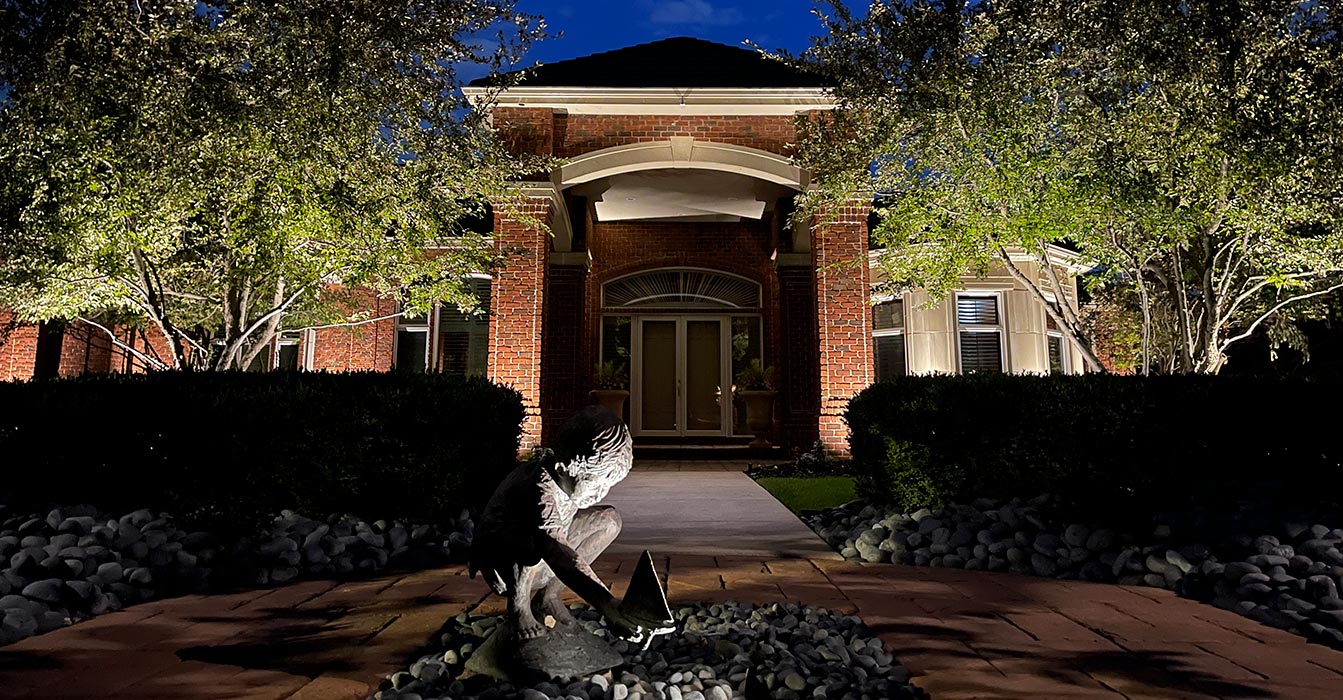
Yards seem to gain a whole different personality when the sun goes down. All that cool texture on your favorite tree, the shape of that sculpture, the way your garden path curves – it often just disappears into the dark. But what if you could bring that hidden beauty to life? That’s where outdoor accent lighting comes in. It’s as if you’re giving your landscape a nighttime glow-up, highlighting specific things, creating some captivating drama, and turning your yard from just being “there” to being a real showstopper after dusk. Forget just basic floodlights, this is about making your landscape feel like a work of art. Let’s explore some creative ways to use light to accentuate the unique features of your outdoor space.
The Power of the Spotlight: Why Focusing Light Makes Such a Difference
Accent lighting is all about emphasizing by pointing a light exactly where you want people to look. Unlike those lights that just generally brighten up an area, accent lights are meant to be precise tools, meaning they’re designed to show off shape, texture, and color, adding depth and making things pop. Think of them as your landscape’s personal highlights, drawing the eye and creating interesting focal points. To see how a pro uses this to bring lighting visions to life, take a look at our residential lighting video here.
Creative Ideas for Highlighting Landscape Elements
There are seriously so many interesting things you can do with outdoor accent lighting. It really just comes down to what you want to show off and a little bit of smart design principles. Here are a few ideas to get those creative juices flowing:
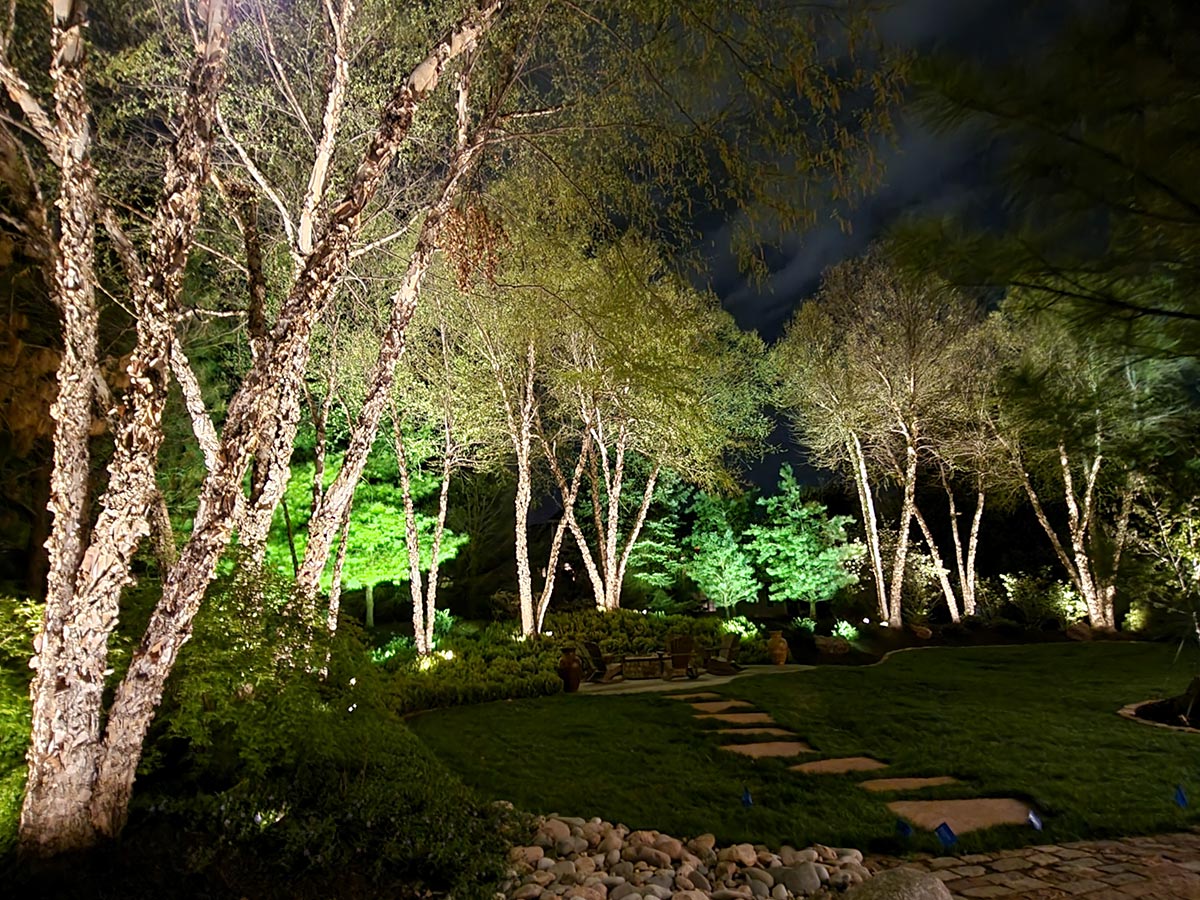
Idea 1: Let’s start with trees – they’re fantastic for lighting! Instead of having just one light pointing up, try hitting a tree from two different angles. This cross-lighting really shows off the tree’s full shape and cuts down on weird, harsh shadows. If a tree has cool, textured bark, try putting a narrow-beam light close to the trunk and aiming it straight up so that it just skims the surface (trust me, this will make all those details stand out). And of course, don’t forget about the canopy. Placing lights up high on the branches and pointing them down can create this amazing “moonlighting” effect, casting soft, dappled shadows on the ground below and gently lighting up the plants underneath.
Idea 2: Got a cool statue, sculpture, or maybe some cool piece of garden art? If you think they look great during the day, you’re in for a shock when you find out how the right accent lighting can make them look absolutely magical at night. Try positioning a spotlight low and slightly to the side and front, this creates dramatic shadows that really emphasize the form and texture. For something softer, you can use a wider light or maybe even a couple of lights to give it a gentle, more even glow.
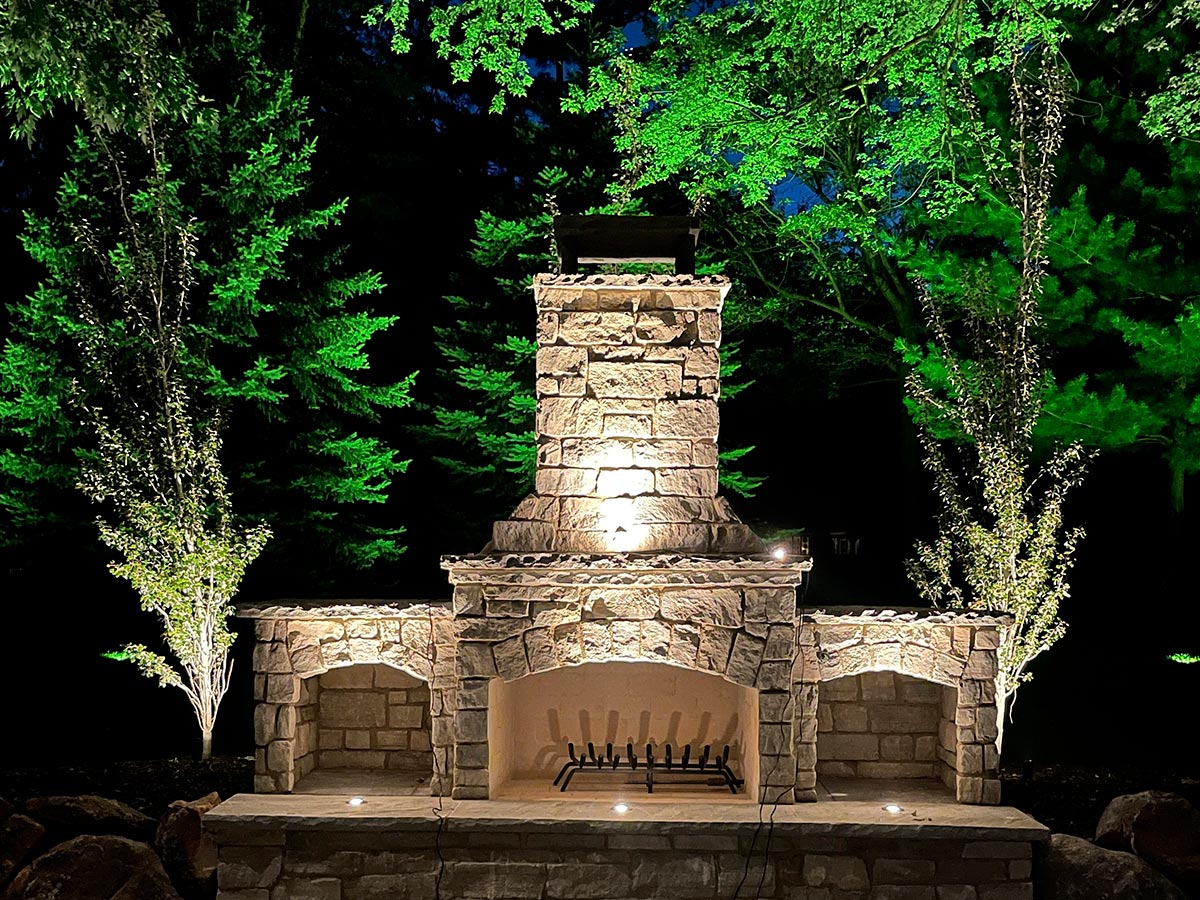
Idea 3: Even things you might not normally think of illuminating, like textured walls, stone features, or even a privacy fence, can look incredible with a few accent lights. Skim light across them from fixtures placed close to the surface, this adds serious visual interest by bringing out a world of unique patterns and textures. Or, for something more dramatic, you could put a decorative screen or even a piece of garden art in front of an illuminated wall to create a neat silhouette effect.
Idea 4: Water features are structures just begging to be lit. Putting underwater lights in ponds, fountains, or waterfalls brings them to life at night by showing off the water movements and creating enlarged, mesmerizing reflections. You can even add accent lights around the edges of a water feature to draw attention to it and the plants around it.
Idea 5: Even your smaller plants and flower beds can get in on the fun of accent lighting. Use small, discreet spotlights to highlight the vibrant colors or interesting shapes of specific flowers, shrubs, or ornamental grasses. The key here is to make sure the light is focused on the plant itself and not shining in anyone’s eyes.
Lighting Techniques for that Extra Level of Artistry
Beyond simply knowing where to aim a light, knowing how to combine it with several lighting techniques and concepts is just as beneficial for boosting your outdoor accent lighting creativity:
- Uplighting: Shining light upwards from below creates a dramatic look and really emphasizes how tall something is.
- Downlighting: Shining light downwards from above feels more natural and can create beautiful, interesting shadows.
- Silhouetting: As we mentioned, this is when you light up something behind an object to show off its outline.
- Grazing: This technique is about skimming light across a surface to highlight its texture.
- Adjustable Beam: Picking lights where you can adjust how wide the beam is lets you decide if you want a tight, focused spot or a broader wash of light.
- Brightness: You can even play with how bright the lights are and their color temperature to add depth and set a specific mood.
Making it All Work: Pulling Your Lighting Plan Together
If there’s one thing you should take away from all of this, it’s that great outdoor accent lighting isn’t just a bunch of random spotlights, it’s about creating a whole picture. Think about how your accent lights work with your other outdoor lights, like path lights or general area lights. You also need to consider where people will be viewing your landscape from – both indoors and outdoors – so you’re not accidentally causing unwanted glares. Planning is super important to make sure everything looks balanced and is an improvement to your landscape’s natural beauty without being overwhelming or annoying. To truly understand the transformative power of thoughtful illumination, explore our insights on how lighting design can completely change a space.
Getting creative with outdoor accent lighting is a fantastic way to make your yard truly special after dark. By choosing the right things to highlight and experimenting with different techniques, you can create a captivating and unique nighttime space that shows off your landscape in stunning new ways you can’t even imagine. For more ideas of what’s possible with accent lighting, checkout the Midwest Lightscaping website where you’ll find even more ideas and examples to help your creativity.
FAQs
Here are some common questions about using outdoor accent lighting in your landscape:
What’s the main difference between accent lighting and other outdoor lighting?
Accent lighting is specifically designed to highlight individual features like trees, sculptures, or architectural details, drawing attention to them. Other lighting types, like path or floodlights, provide general illumination for safety or broader areas.
Can I use accent lighting to make small plants look more interesting at night?
Yes! Small, focused accent lights can be used to highlight the unique shape, color, or texture of even small plants, making them stand out and adding visual interest to garden beds at night.
How can I hide outdoor accent lighting fixtures?
Fixtures can often be concealed by strategically placing them behind plants, rocks, or other landscape elements. For even more concealment, consider in-ground well lights designed to shine from a ground level, making them very discreet.
Does outdoor accent lighting use a lot of electricity?
When using energy-efficient LED bulbs, outdoor accent lighting is relatively low in energy consumption. Low voltage systems also inherently use less power than line voltage.
Can I use colored lights for outdoor accent lighting?
Yes, colored LED accent lights are widely available and can be used creatively to highlight features or set a specific mood. Just be sure to consider how the color will affect the appearance of the illuminated object.