
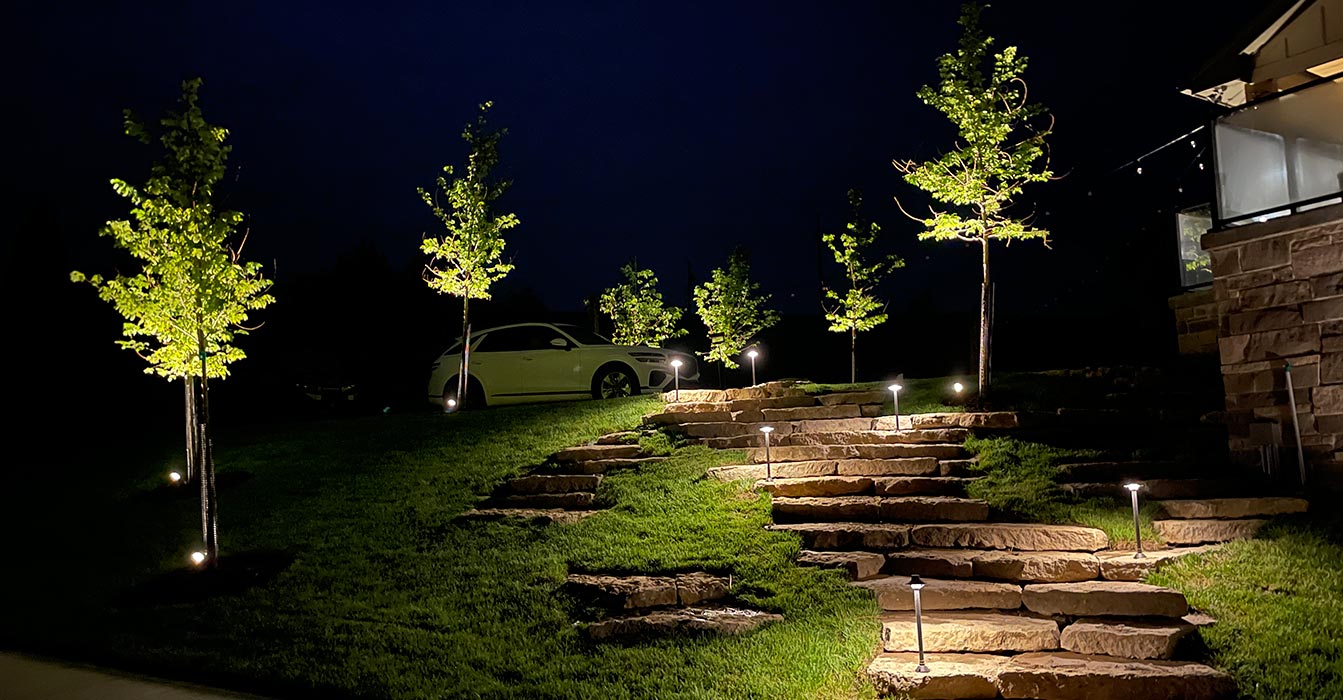
As the sun dips below the horizon, your garden paths can suddenly start to feel a bit more shadowy. That’s where good outdoor path lighting comes in. It’s not just about making sure you don’t stumble in the dark (though that’s super important). These lights can completely change the look of your yard after dusk, making it look inviting, showing off your landscaping, and letting you actually use your outdoor spaces even after dark. Let’s talk about why these outdoor path lights are a big deal and what kinds of options are out there.
Why Path Lights Are Your Yard’s Best Friend After Dark
Any professional will agree that adding lights along your paths does a few really important things for your place. First and foremost, it’s a matter of safety. You’re simply making it safer to walk around in the dark, helping everyone steer clear of trips and falls. But beyond keeping you from falling, path lights also do a great job of outlining your walkways, neatly separating them from the grass or garden beds. This little bit of definition makes your whole landscape look tidier and more finished.
Think about how your home looks from the street too. A well-lit path rolling out a welcoming glow instantly makes your place feel friendlier and more inviting to anyone walking or driving by, a definite win for curb appeal! And let’s not forget that by lighting up the routes to your patio, deck, or garden, you’re making it way easier and safer to hang out in those spots once the sun has gone down. To see what else a professional designer has to say about designer-only services, click here.
Exploring the Options: Types of Outdoor Path Lights
When you start looking at outdoor path lights, you’ll find there’s a good variety, each bringing its own style and working best for certain applications.
Traditional path lights: These are probably what first comes to mind – a fixture head sitting on top of a stake that you push into the ground along the edge of your path. They are very common and you can find them in tons of styles and materials, from metal to plastic, usually casting a gentle pool of light downward or slightly outward. These offer that classic path lighting look.
Bollard lights: If you need something a bit more substantial or want a more modern vibe, bollard lights are taller, sturdier fixtures. They light things up from a higher point and are often a good fit for bigger landscapes or even commercial areas.
In-ground lights (or well lights): These are neat because they sit at ground level, almost disappearing during the day. They can send light straight up or out, providing a subtle source of light that’s really effective without being visually intrusive.
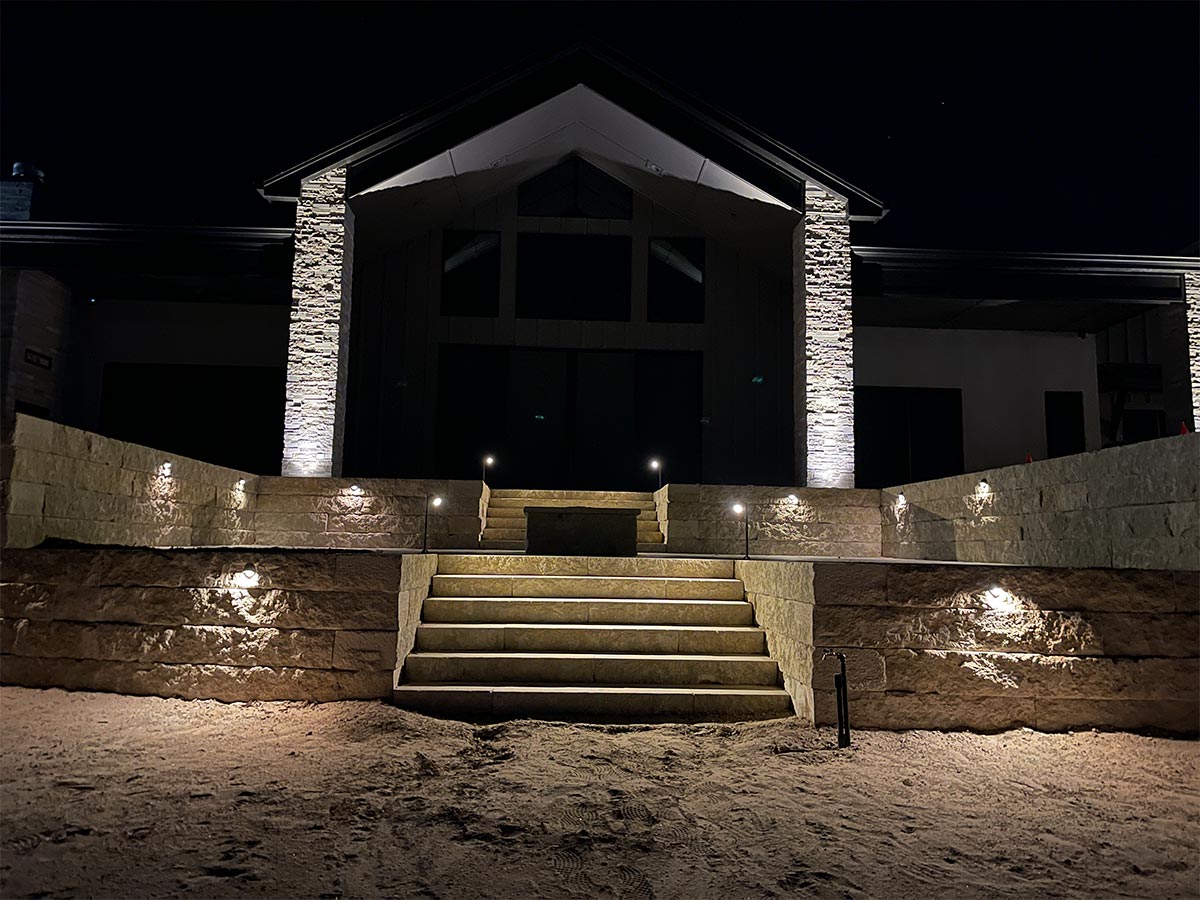
Step lights: As the name suggests, these are made specifically for stairs or any change in level. They’re built right into the steps to shine light directly onto the surface where you need it most for safety.
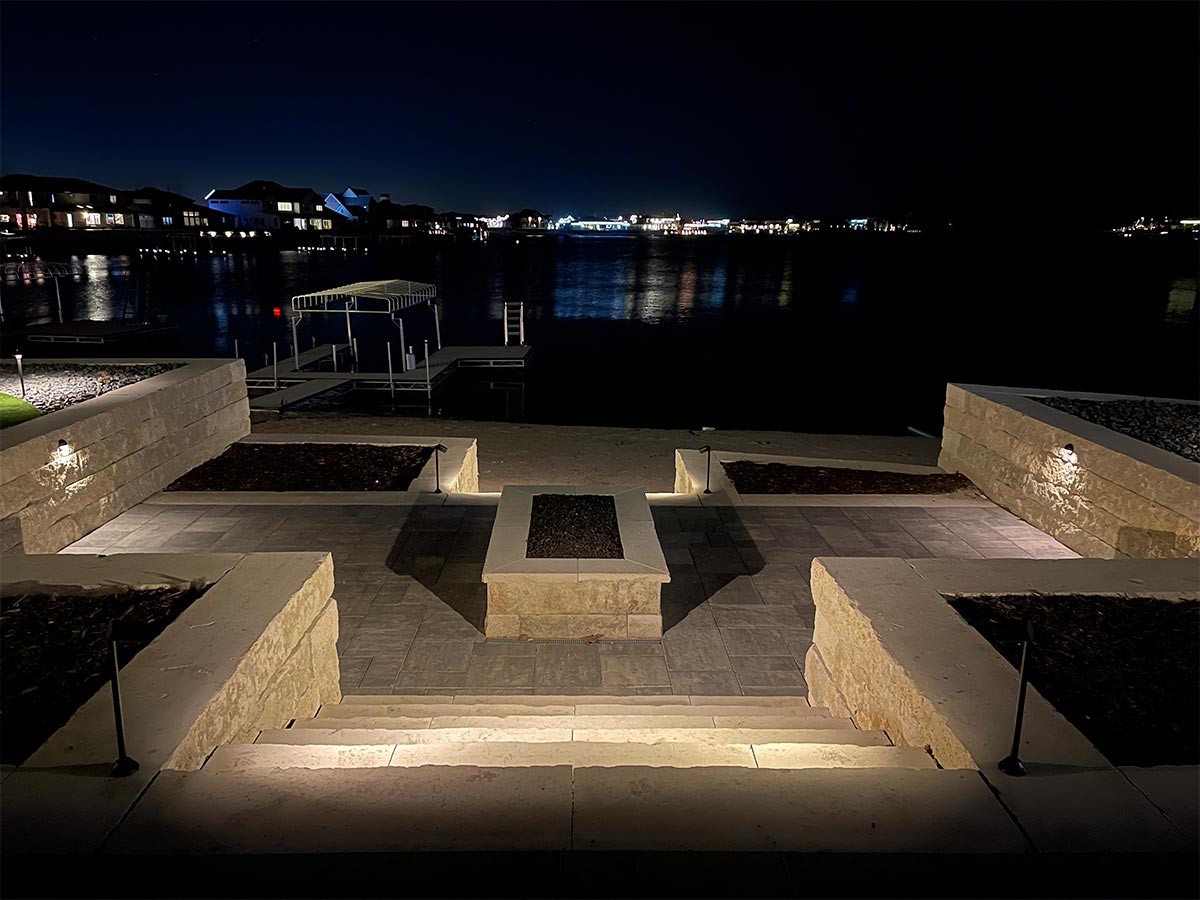
Integrated hardscape lights: These are built right into walls, pavers, or retaining walls. They offer a super clean, modern look and blend right in with your stone or concrete work.
Designing for Impact and Safety
Just sticking lights wherever there’s a dark spot on your path isn’t really designing. To make your outdoor path lights truly effective and attractive, keep these tips in mind.
Don’t just line the lights up like runway lights; it can look a bit much and feel unnatural. Spacing is important, if they’re too close it’ll create an intense “runway” effect, but spacing them too far apart leaves dark, unsafe patches. The perfect distance depends on how bright the light is and how wide its beam spreads, but often staggering them rather than putting them in a straight line looks nicer and works better. To learn more about how brightness and beam spread affect the design, check out our blog “The Art and Science of Lighting Design”.
Also, pay attention to how tall the fixtures are and where the light is pointing. The goal is to get the light onto the path itself, not shining straight into the eyes of anyone walking by or looking at your yard. Try to pick lights that match the style of your house and landscape too, so everything looks carefully pulled together and intentional.
Nobody likes walking into a blinding light. Avoid glare by choosing fixtures that have shields or hoods to direct the light down. Or, simply be mindful of where you place them so you can’t see the actual bulb from where you’d normally be viewing the path or yard. And finally, think about how your path lights fit in with any other outdoor lighting you might have to create a balanced and welcoming scene at night.
A Note on Installation
Putting in outdoor path lights, especially the low-voltage kind, is often pretty straightforward. However, making sure the wiring is done correctly and that you have the right size transformer is really important if you want your lights to work properly and last a long time. You want to make sure connections are waterproof and that they’re getting enough power so they don’t flicker or look dim. If you’ve got a bigger setup, or if you’re just not comfortable getting your hands dirty with electrical work, hiring a pro to install them is totally worth it for peace of mind and the best results. We recommend checking out Midwest Lightscaping’s residential lighting and commercial lighting services to get a better idea about how a pro can help you with the installation process.
At the end of the day, well-thought-out outdoor path lights are a crucial piece of having an outdoor space that functions well and looks beautiful after dark. By knowing your options and putting a little thought into the design, you can make sure your paths are not only safe to walk on but also add a lovely touch to your property once the sun goes down.
FAQs
Here are some common questions homeowners have about using outdoor path lights:
How far apart should I space my outdoor path lights?
The best spacing depends on the brightness and beam spread of the specific fixture you choose. A common guideline is to space lights so that the pools of light slightly overlap, avoiding dark gaps. Experiment with placement at night before the final installation.
Can outdoor path lights be used in gardens or flower beds?
Absolutely! Low-level path lights can be used to define the edges of garden beds or provide gentle illumination within the garden itself, highlighting plants and adding depth to the landscape.
How do I prevent glare from my outdoor path lights?
Choose fixtures with shields or hoods that direct the light downwards onto the path. Also, position lights carefully so the bulb isn’t directly visible to someone walking on that path. Remember that lower wattage bulbs might also be sufficient and produce less glare.
What type of wire is used for low voltage outdoor path lights?
Low voltage outdoor lighting systems typically use direct burial low voltage cable, commonly 12-gauge or 14-gauge. The appropriate gauge is going to depend on the total wattage of your lights and the length of the cable run to prevent voltage drop.
Do outdoor path lights require much maintenance?
Regular maintenance is key to keep your path lights looking and working their best. This often includes cleaning debris from lenses, trimming back overgrown plants that might obstruct the light, and occasionally checking connections and bulb functionality.