
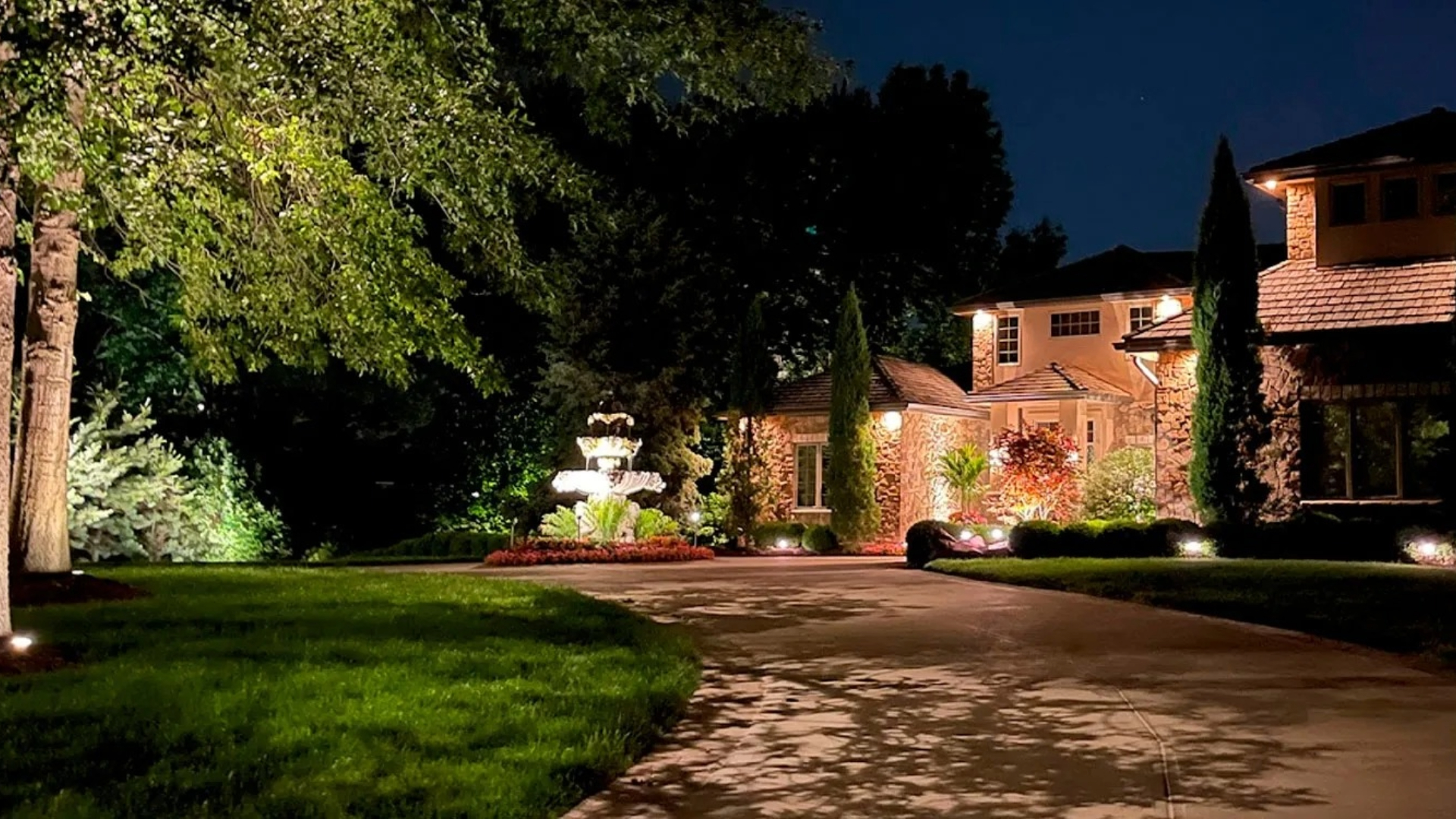
If you live in an HOA-governed neighborhood in the Omaha metro and you’re thinking about permanent roofline lighting, color-changing accent lighting, or even just brighter path lighting, one question tends to come before all the others: will my HOA actually let me do this?
This guide walks through what Nebraska HOAs can and typically do restrict when it comes to outdoor lighting, what the actual approval process looks like, and how to design a system that gets approved the first time instead of getting flagged after the fact.
Quick Answer: Nebraska doesn’t have a state law that specifically regulates HOA lighting rules. Instead, lighting restrictions live inside each community’s own governing documents, its declaration (CC&Rs), bylaws, and architectural guidelines, which function as a private contract between you and your association. Most Nebraska HOAs don’t ban outdoor lighting outright, but many do regulate brightness, color temperature, direction, and hours of operation. The safest path is submitting a simple written request with fixture specs, photos, and planned hours before installation, rather than installing first and hoping nobody notices.
Quick Answer:
Does Nebraska Law Regulate HOA Lighting Rules?
Nebraska doesn’t have a single, dedicated homeowners association act the way some states do. Instead, most Nebraska HOAs are organized as nonprofit corporations under the Nebraska Nonprofit Corporation Act, and the specific rules you live under, including anything about lighting, come from your community’s own declaration and bylaws, not from state statute. A few narrow state and federal laws generally touch on HOAs, assessment liens, the dissolved-HOA custodianship process, and fair housing protections, but none specifically address outdoor lighting.
Your HOA’s authority over your lighting comes entirely from the document you agreed to when you bought your home, usually called the Declaration of Covenants, Conditions, and Restrictions (CC&Rs), along with any separate Architectural Review Committee (ARC) guidelines. That document is a private contract, and it’s the only place the real answer to “can I do this” actually lives. This guide covers common patterns, but it isn’t a substitute for reading your own CC&Rs or, in a genuine dispute, talking to an attorney.
What HOAs Typically Restrict
Even without a state mandate, most Douglas, Sarpy, and Lancaster County HOAs address outdoor lighting in one of three ways.
Light trespass and glare. This is the most common concern: unshielded or upward-facing fixtures that spill light onto a neighbor’s property or shine into their windows. Many CC&Rs require fixtures to be shielded or downward-aimed for exactly this reason.
Aesthetic and fixture-type restrictions. Some associations specify approved fixture styles, materials, or colors to keep a consistent look across the neighborhood. This is where color-changing systems most often draw questions, not because they’re prohibited outright, but because a board hasn’t seen one before and doesn’t know what to expect.
Brightness, color temperature, and hours. A growing number of communities specify warm white lighting rather than cool white or blue-toned light, and set hours during which decorative or accent lighting must be off, commonly by 10 or 11 p.m. on non-holiday nights.
What Nebraska HOAs Commonly Regulate on Outdoor Lighting
| Category | Typical Rule | Why It Exists |
| Direction/shielding | Fixtures must be downward-aimed or shielded | Prevents light trespass onto neighboring property |
| Color temperature | Warm white preferred; cool/blue often restricted | Aesthetic consistency, reduced glare |
| Brightness | Lumens capped or “not excessive” language | Prevents one home overpowering the street |
| Hours of operation | Off by 10–11 p.m. except holidays/approved events | Limits nighttime disturbance |
| Color-changing/RGB | Often requires separate approval or a defined seasonal window | Newer technology; boards address it case by case |
| Holiday displays | Permitted within a date range (e.g., Thanksgiving–Jan 15) | Balances festivity with year-round aesthetic rules |
Permanent and Color-Changing Lighting: What Gets Questioned
Permanent roofline lighting is different from a seasonal light kit in one important way: it’s not coming down in January, so your HOA is approving a year-round fixture, not a temporary decoration. That’s usually the actual source of hesitation, not the technology itself.
A few things tend to come up specifically with permanent, color-changing systems:
- “Is this a holiday display or a permanent architectural feature?” Boards often have separate rules for each, and a permanent system technically falls into both categories depending on how it’s being used on a given night.
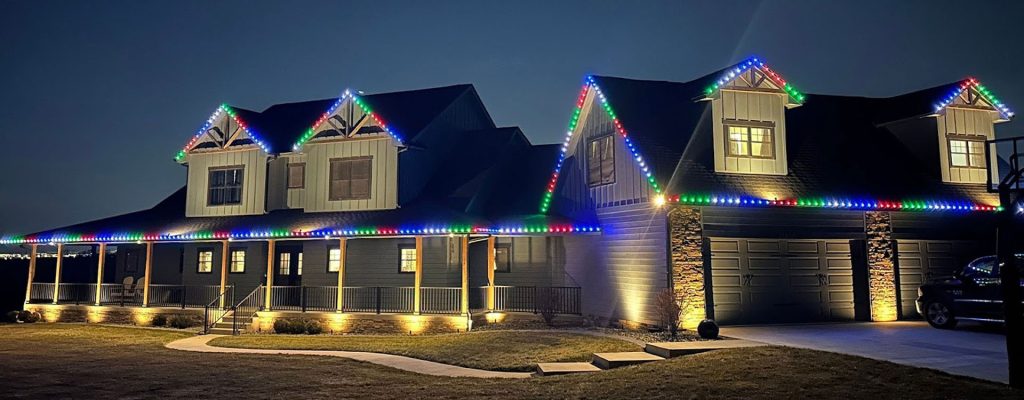
- Chasing, flashing, or animated patterns. Static color washes (a solid red, a solid warm white) draw far less scrutiny than fast-moving chase patterns or strobing effects, which some CC&Rs prohibit outright as a nuisance.
- Game-day use. Husker red on Saturdays is an easy, low-conflict use case to bring to a board, since it’s typically infrequent, predictable, and widely embraced across the metro. It’s worth naming specifically in your request rather than leaving “special occasion use” vague.
- Security-adjacent use. Some boards are comfortable with a warm-white permanent system doubling as security lighting, so long as the color stays within the community’s approved range rather than shifting to a bright cool white or full-color display overnight.
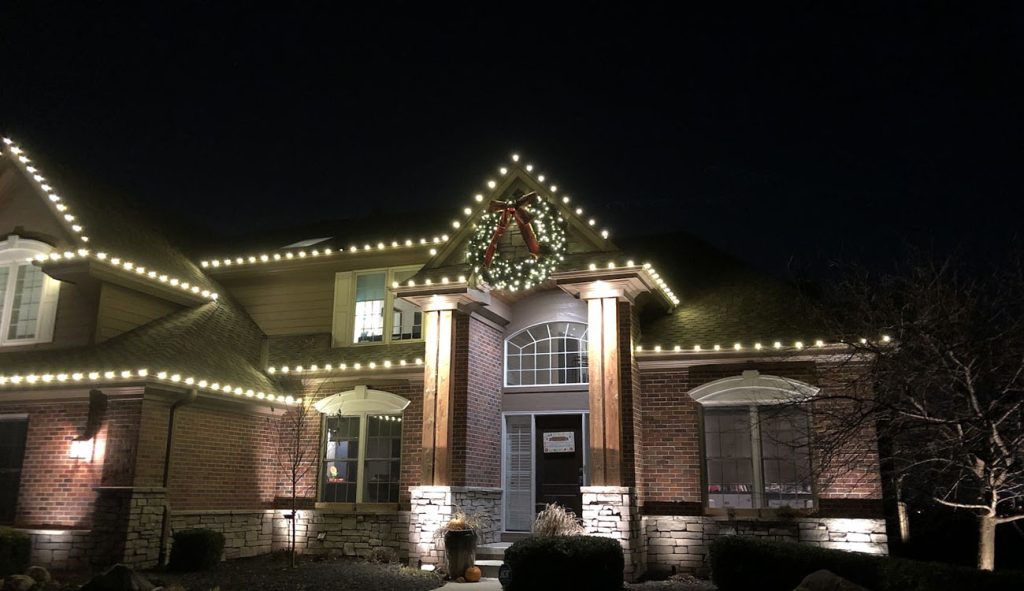
The practical takeaway: a static, warm-white default with scheduled color changes for specific, named occasions (holidays, Husker game days, a birthday) tends to move through approval far more smoothly than an unrestricted “changes to anything, anytime” pitch.
The Approval Process, Step by Step
Every HOA’s process looks slightly different, but the pattern across most Omaha-area communities follows the same shape.
- Read your CC&Rs and any separate ARC guidelines first. Look specifically for sections on “exterior alterations,” “architectural review,” or “lighting.”
- Identify who reviews requests. This is sometimes the full board, sometimes a dedicated Architectural Review Committee, and sometimes a property management company acting on the board’s behalf.
- Submit a written request before installation. Verbal approval from a board member isn’t the same as a documented approval, and you want a paper trail if a question ever comes up later.
- Include specifics, not just intent. A request that says “I want to add some lights to my roofline” invites more questions than one that includes fixture type, color temperature, mounting location, and planned hours of use.
- Expect a response window. Many governing documents specify a decision period (commonly 30 days); if yours doesn’t, ask directly how long review typically takes.
- Keep the approval in writing. Save the email or letter. If your community changes management companies or board members down the line, this is your proof the installation was authorized.
Sample HOA Lighting Request Template
Here’s a starting template you can adapt and submit to your board or ARC:
Subject: Architectural Review Request — Exterior Lighting Installation
Address: [Your address] Date submitted: [Date]
I am requesting approval to install a permanent LED roofline lighting system with the following specifications:
- Fixture type: Low-voltage LED track/channel mounted to fascia and soffit
- Mounting locations: [e.g., front roofline and garage peak]
- Default color: Warm white (approx. 2700K–3000K)
- Special-occasion use: Color changes for [holidays, Husker game days, etc.], limited to [X] occasions per month
- Hours of operation: On at dusk, off by [10 or 11 p.m.] except during approved special occasions
- Shielding/direction: Fixtures are downward-facing/shielded to prevent light spillover onto neighboring properties
- Installer: [Company name, license/insurance info if requested]
Attached: [photo of home, product spec sheet, or rendering if available]
Please let me know if additional information is needed for review. I’m happy to answer questions or adjust the plan to fit community guidelines.
Attaching a real product spec sheet and, if your installer can provide one, a simple rendering of the planned look goes a long way toward a fast approval, boards approve what they can clearly picture.
What If Your HOA Has No Lighting Rule at All?
This is more common than most homeowners expect. Many CC&Rs address structural changes, fencing, and paint colors in detail but say little or nothing specific about lighting. If that’s your situation, you’re not automatically free to do anything you want; most declarations include a general clause requiring board approval for any “exterior alteration,” which lighting installation likely falls under even without a lighting-specific rule.
The safer move in a gray-zone situation is still to submit a written request rather than assume silence means permission. It costs you a short email and gets you a documented approval; skipping it risks a dispute later even if your installation would have been approved anyway.
What to Do If You’re Denied or Fined
If your request is denied, ask for the specific reason in writing, tied to the actual governing document language, not just “the board didn’t like it.” A vague denial is worth pushing back on; a denial citing a specific brightness or color-temperature clause gives you something concrete to redesign around and resubmit.
Most HOA governing documents include an appeals process, often a request to address the full board directly or a right to be heard at a board meeting. If you’ve already installed lighting and received a fine or violation notice, respond in writing before the response deadline, and check whether your declaration requires the HOA to offer a cure period (a chance to fix the issue) before fines apply.
For a genuine dispute, particularly one involving a five-figure lighting investment, a short consultation with an attorney familiar with Nebraska community association law is worth the cost before you spend more money on a fix that might not resolve the actual objection.
Why Design Matters Before You Ever Submit a Request
The single biggest factor in whether a lighting request sails through or gets stuck in back-and-forth is whether the design was built with HOA approval in mind from the start. A system designed only for maximum visual impact, bright, cool-toned, unshielded, animated, is going to draw exactly the kind of scrutiny outlined above. A system designed with shielded fixtures, a warm default color, and clearly defined special-occasion use is designed to be approved.
This is where working with a local installer who already understands how Omaha-area HOAs evaluate these requests pays off, both in the quality of the finished result and in how smoothly it gets through your board. We build every permanent lighting design around a warm, static default with clearly scoped special-occasion color use, and we’re glad to put together the fixture specs and photos you’ll need for your own HOA submission as part of your consultation.
Thinking about permanent lighting for an HOA-governed property? We’ll help you design a system built to get approved the first time. Schedule your free consultation here. Schedule your consultation here.
Frequently Asked Questions
Can my HOA ban permanent outdoor lighting entirely?
Generally, yes, if their governing documents grant broad authority over exterior alterations, a board can restrict or deny a specific type of installation. In practice, outright bans on all permanent lighting are uncommon; most Nebraska HOAs regulate how it’s used (color, brightness, hours) rather than banning it outright. Your specific CC&Rs are the only definitive answer.
Can I use Husker red on game days if my HOA has color restrictions?
Many boards are comfortable with limited, predictable special-occasion color use, especially something as widely embraced locally as Husker game days, when it’s clearly scoped in your request (specific days, specific hours) rather than left open-ended. Naming it explicitly in your submission, rather than hoping nobody notices, is the safer approach.
What color temperature is safest for HOA approval?
Warm white in the 2700K–3000K range is the closest thing to a universal safe default across Omaha-area HOAs. It’s what most architectural guidelines already reference, and it reads as a security or accent light rather than a decorative display when it’s not actively in a special-occasion color mode.
What if my neighbor complains but my HOA never had an issue?
A neighbor complaint doesn’t automatically mean a violation; your board still has to evaluate it against the actual governing documents. That said, a documented approval on file is your best protection in exactly this situation, since it shows the board already reviewed and authorized the installation.
Do I need HOA approval for temporary holiday lights too, or just permanent systems?
That depends entirely on your CC&Rs. Some communities exempt temporary seasonal displays within a defined date range from the full architectural review process, while others require the same approval for any exterior lighting, temporary or permanent. Check your specific holiday lighting provisions before assuming an exemption applies.
Conclusion
Nebraska doesn’t hand HOAs a specific lighting rulebook; that job falls to each community’s own CC&Rs and architectural guidelines, which means the real answer to “can I install this” is always sitting in a document you already have access to. The homeowners who get through approval smoothly aren’t the ones with the most legal knowledge; they’re the ones who submit a clear, specific, written request before installing, with a design that’s already built around shielding, warm color temperature, and clearly scoped special-occasion use.
Midwest Lightscaping has designed and installed permanent and landscape lighting across the Omaha metro since 2011, including plenty of HOA-governed neighborhoods. We build every design with approval in mind from the first conversation, and we’ll help you put together everything your board needs to say yes.