
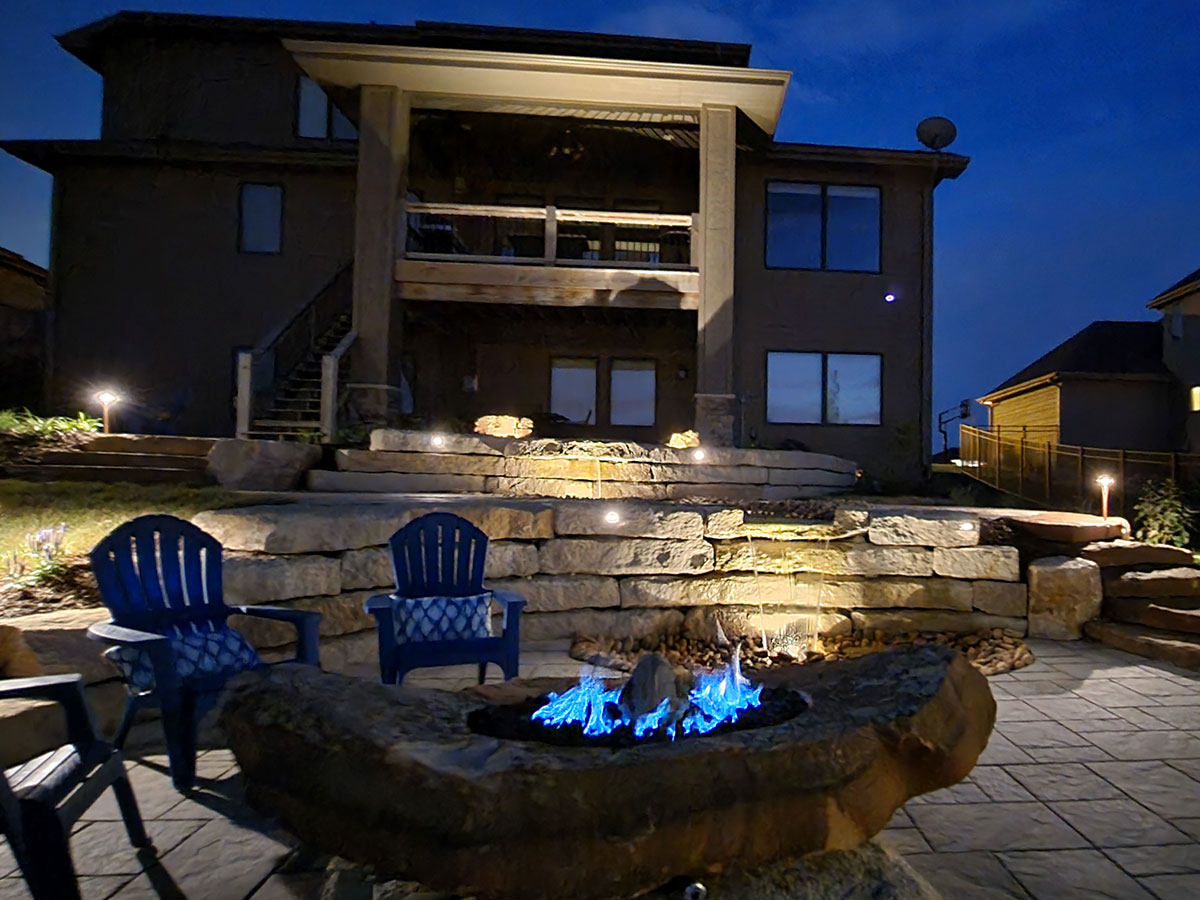
LED landscape lights are rated for 25,000 to 50,000 hours, but that number alone does not tell you what actually happens once a fixture is in the ground. The rating comes from a lab test on the LED chip. What determines how long a fixture really lasts in your yard depends on the driver inside it, the housing material, and how the system was installed.
Midwest Lightscaping has been designing and installing landscape lighting across Omaha since 2011, and the systems we installed a decade ago are still running today, which is a better answer to this question than any rating on a box.
Quick Answer: LED landscape lights are rated for 25,000 to 50,000 hours of use, or roughly 11 to 23 years at typical nightly runtime. LEDs dim gradually rather than burning out, and most fixtures fail well before the chip does, usually because of a weak driver, a low-quality housing, or incorrect voltage. Fixture quality and installation determine actual lifespan far more than the LED rating itself.
LED Lifespan by the Numbers
LEDs do not burn out the way older bulb types do. They dim gradually over time in a process called lumen depreciation, and the industry marks end of life at L70, the point where a fixture still works but only produces 70 percent of its original brightness.
Here is how LED landscape lighting compares to older bulb types by rated hours and average replacement frequency.
| Bulb Type | Rated Hours | Replacement Frequency |
| Incandescent | 1,000 to 2,000 hours | Every 6 to 18 months |
| Halogen | 2,000 to 4,000 hours | Every 1 to 3 years |
| CFL | 8,000 to 10,000 hours | Every 3 to 5 years |
| LED | 25,000 to 50,000 hours | Every 10 to 23 years |
At a typical 6 to 8 hours of nightly use, a 25,000-hour LED fixture works out to roughly 9 to 11 years. A 50,000-hour fixture stretches to 17 years or more. These numbers describe the LED chip under ideal conditions. The fixture around that chip is what determines whether you actually reach them.
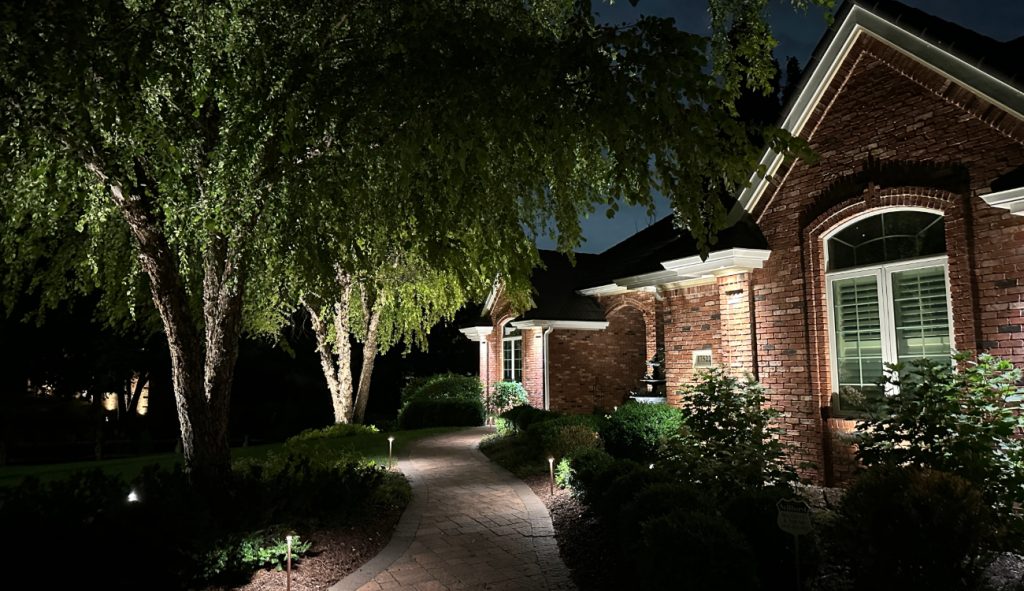
Why the Driver and Housing Matter More Than the LED Chip
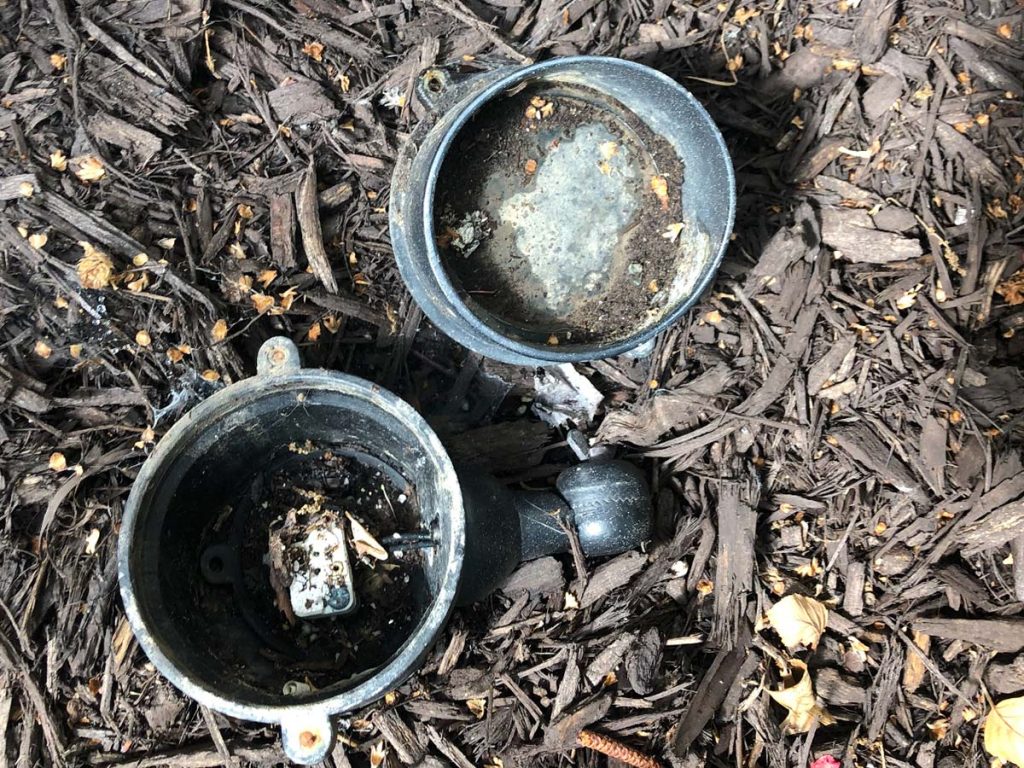
When a landscape light fails early, the LED chip is rarely the reason. The driver, the component that regulates power flowing into the chip, is the most common point of failure in any outdoor fixture. Budget fixtures use lower-cost drivers that were never built to handle years of temperature swings, and once the driver fails, the fixture goes dark even if the chip inside still has years of life left.
Housing material is the second major factor, since it is what protects the driver from heat, moisture, and physical stress over time.
| Housing Material | Typical Fixture Lifespan | Durability Notes |
| Solid brass | 20+ years | Resists corrosion, dissipates heat well, holds up under repeated temperature swings |
| Cast aluminum | 3 to 7 years | Corrodes once moisture gets past the finish, more prone to cracking over time |
| Plastic or composite | 1 to 3 years | Becomes brittle with age and temperature change, lets moisture reach the driver early |
A brass fixture costs more upfront, but the housing is doing real work protecting the one component most likely to fail first.
Want to see the difference in person before you commit to a system? Schedule a free design consultation and we’ll show you exactly what we install and why.
7 Factors That Shorten LED Landscape Light Lifespan
A handful of conditions account for nearly every case of early fixture failure.
- Excessive heat buildup inside a poorly ventilated housing, which accelerates driver wear.
- Moisture intrusion through degraded seals or gaskets, which corrodes internal components.
- Voltage running higher than the fixture is rated for, which stresses the driver directly. Even a modest overvoltage condition can meaningfully shorten driver life.
- Undersized transformers or thin wire gauge on long runs, causing voltage drop and inconsistent power to fixtures further from the source.
- Low-quality drivers not built to handle repeated temperature swings between seasons.
- Physical damage to housing or lenses from lawn equipment, foot traffic, or ground movement.
- UV exposure breaking down plastic housings over years of direct sun.
IP Ratings and What They Actually Protect Against
IP rating, short for Ingress Protection, tells you how well a fixture resists dust and moisture. For most outdoor landscape applications, IP65 is the minimum. Fixtures going in-ground or near a water feature should be rated IP67 or IP68.
An IP rating only holds up as long as the seal itself does. Cheap rubber gaskets degrade over time from UV exposure and repeated temperature change, losing their effectiveness within a few years regardless of what the original rating stated. A fixture with a strong IP rating but a poor quality gasket will still let moisture in eventually, just later than an unrated fixture would.
How to Evaluate a Landscape Lighting Warranty
A warranty reflects what a manufacturer actually expects from their own product, not just what the marketing claims. A one-year warranty on a fixture rated for 50,000 hours is worth questioning, since it suggests the company does not expect the full fixture, driver, and housing included to hold up anywhere close to that number.
Check specifically what a warranty covers. It should include the LED component, the driver, and the housing as separate items. Many budget warranties cover only the chip and exclude the driver, which happens to be the part most likely to fail first. A longer warranty term is a reasonable signal of build quality, but only if you confirm what is actually included.
How Nebraska Winters Affect Lifespan
Most guides on this topic are written for warm or coastal climates, where heat and humidity are the main stress factors. Omaha deals with a different set of conditions that rarely get covered anywhere else.
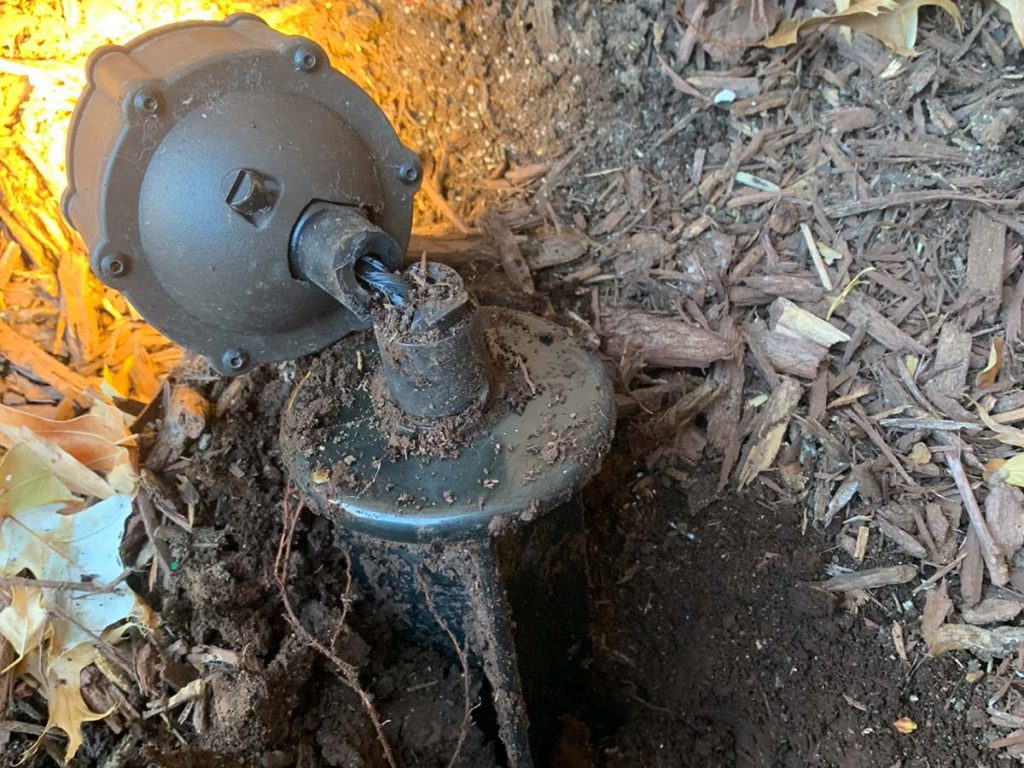
Freeze-thaw cycling stresses more than buried wire. It also puts repeated pressure on sealed housings and gaskets. A seal that holds up fine through a mild winter elsewhere can develop small gaps here as materials contract in the cold and expand again once temperatures rise, and once that seal weakens, moisture reaches the driver.
Extreme cold affects driver performance on startup differently than heat-driven degradation does, which is the stress factor most warm climate content focuses on exclusively.
De-icing salt is a real corrosion risk for path lights and driveway fixtures placed near where salt gets applied or where plowed snow accumulates, a factor that simply does not exist in warmer climate guides.
Snow removal equipment poses a physical risk to stake-mounted fixtures near driveways and walkways, another condition warm climate guides never need to mention.
Our crews have installed and maintained landscape lighting through more than a decade of Omaha winters, and every system we design accounts for freeze-thaw cycling, clay soil movement, and salt exposure from the start.
See how systems we installed years ago are holding up today. Browse our project gallery here.
How to Maximize the Lifespan of Your System
Start with fixture quality. Brass or copper housings with sealed, quality drivers are the biggest single factor in reaching a system’s full rated life, and no amount of maintenance afterward makes up for a fixture that was not built to last.
Size the electrical side correctly from the start. Correct transformer sizing and wire gauge prevent the voltage stress that shortens driver life, especially on larger properties with longer wire runs.
Bury wire to a depth appropriate for local soil conditions. We install at 6 to 8 inches with weatherproof conduit in exposed runs to account for how clay soil moves through Omaha’s freeze-thaw cycles.
Keep up with seasonal maintenance. Catching a failing seal or a loose connection early prevents a small issue from turning into a driver replacement.
Our lighting maintenance program includes scheduled visits built around what Omaha winters do to a system, catching problems most homeowners would not notice until a fixture had already failed.
Frequently Asked Questions
How long do LED landscape lights actually last?
Quality fixtures are rated for 25,000 to 50,000 hours, or roughly 11 to 23 years at typical nightly use. Actual lifespan depends more on driver quality, housing material, and installation than on the rating alone.
Do LED landscape lights burn out like regular bulbs?
No. They dim gradually over years through lumen depreciation rather than failing all at once. A fixture may remain usable well past its rated hours, just producing somewhat less light than it did on day one.
Are the bulbs in landscape lights replaceable?
Many professional-grade fixtures use a replaceable lamp, so a single failed bulb can be swapped without replacing the entire fixture. Integrated fixtures, where the LED is soldered directly to the board, require replacing the whole unit if it fails.
What warranty should I look for?
Look for coverage on the LED, the driver, and the housing as separate items, not just the chip. A warranty of five years or more on a full system is a reasonable benchmark. A short warranty paired with a high hour rating is worth asking about directly.
Does climate really affect how long fixtures last?
Yes. Heat, humidity, freeze-thaw cycling, and salt exposure all affect fixtures differently depending on where you live. A system built and installed for your specific climate will noticeably outlast one that was not.
Conclusion
The number on the box, 25,000 to 50,000 hours, is accurate, but it only tells part of the story. What actually determines how long a system lasts comes down to driver quality, housing material, correct electrical sizing, and an installation built for the climate the fixtures live in.
Midwest Lightscaping has installed landscape lighting across Omaha and the surrounding area since 2011. We use commercial grade fixtures with sealed drivers and brass housings, size every transformer and wire run correctly for the property, and bury wire to the depth Nebraska soil requires. Owner Josh Reeves is personally involved in every project, and our systems from a decade ago are still performing today.