
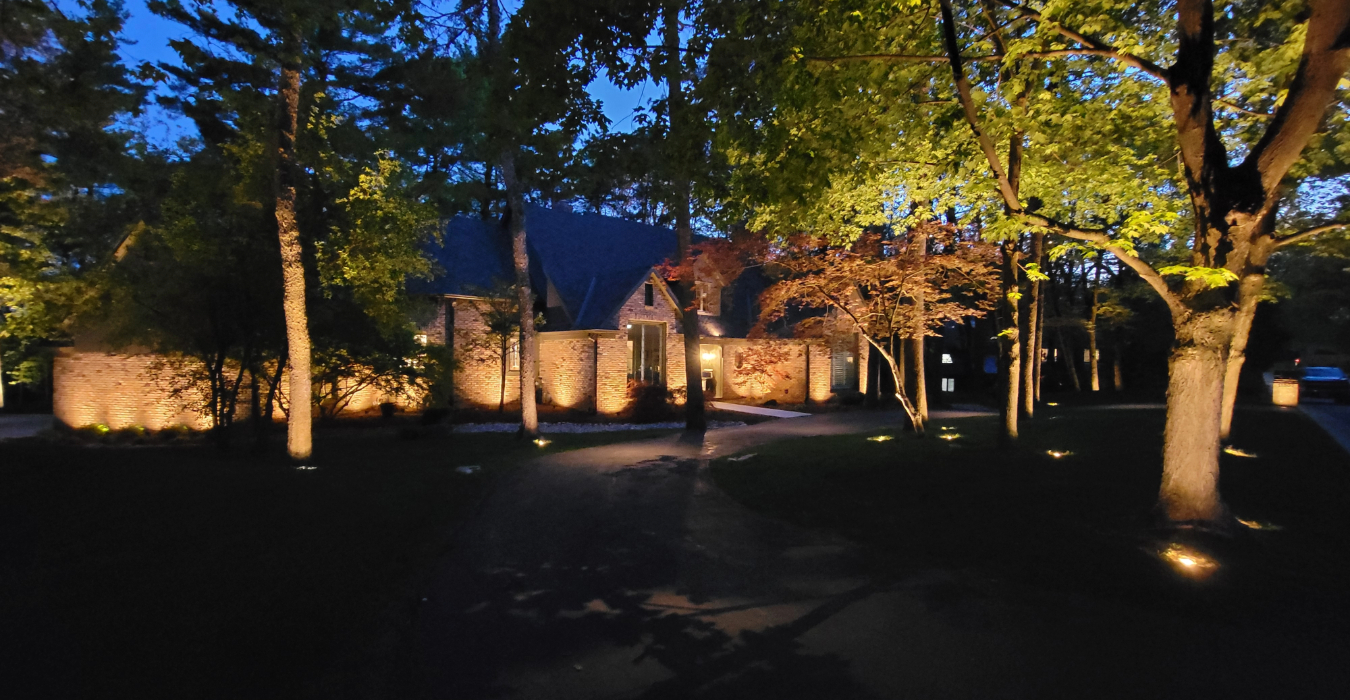
A bad hire does not show up on day one. It shows up after the first Nebraska winter, when a fixture cracks, a wire heaves out of the clay soil, or the transformer that seemed fine in October stops working in March. Choosing an outdoor lighting company is not about picking whoever sends the fastest quote. It is about knowing which questions separate a company that understands this climate and does real design work from one that shows up with a truck full of floodlights and calls it a day.
This guide walks through exactly what to ask, what a real answer sounds like, and what should make you walk away.
Quick Answer: A qualified outdoor lighting company in Omaha should hold verifiable membership in the Association of Outdoor Lighting Professionals or the International Landscape Lighting Institute, explain in specific terms how they install for freeze-thaw cycles and clay soil, provide a written design plan before any fixture is ordered, and put warranty and maintenance terms in writing. If a company cannot answer these clearly, keep looking
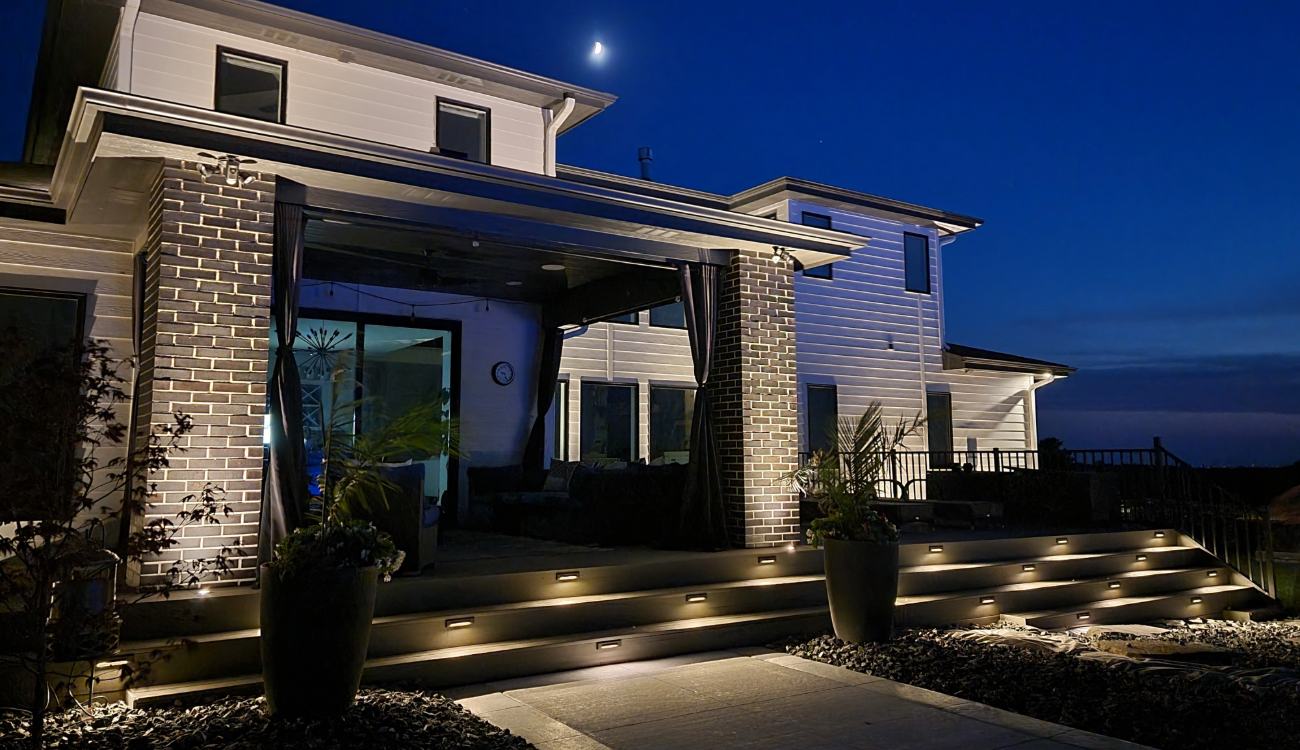
Is This a Real Lighting Company or Someone Moonlighting
Plenty of electricians and landscapers add outdoor lighting to their list of services without any dedicated training in it. That does not automatically make them a bad choice, but it means you need to ask directly instead of assuming.
Start with credentials. Membership in the Association of Outdoor Lighting Professionals (AOLP) or the International Landscape Lighting Institute (ILLI) means a company has gone through education and standards specific to this trade, not general electrical or landscaping work. Do not just take a company’s word for it. Ask for their member number and look it up yourself on the AOLP or ILLI directory. A legitimate company will have no problem pointing you there.
Then ask about licensing directly. Low voltage landscape lighting and line voltage electrical work tied to your home’s main panel are two different things in Nebraska, and they require different levels of licensing. A company that gets vague or changes the subject when you ask who handles the electrical connection and whether that person is licensed is telling you something important.
Midwest Lightscaping has carried both AOLP and ILLI membership since founding the company in 2011, and owner Josh Reeves is personally involved in every project from design through final walkthrough.
If you want to see how a properly credentialed team handles a project from the first call to the final walkthrough, schedule a free on-site consultation and ask us anything on this list.
Do They Actually Know How to Install for Omaha Winters
This is the question almost no company answers well, and it is the one that determines whether your system still looks good in five years.
Omaha sits on clay-heavy soil that expands when wet and contracts hard when it freezes. That movement heaves buried wire runs and shifts staked fixtures over repeated freeze-thaw cycles. A company that has not dealt with this specifically will install the same way they would in a state with sandy soil and mild winters, and the difference shows up fast.
Ask how deep they bury wire runs. The answer should be somewhere in the range of six to eight inches, with weatherproof conduit used in any exposed section. Ask what hardware they use to anchor fixtures against frost movement, and ask them to explain, in their own words, what happens to a shallow, unprotected install after one winter here. A company that has genuinely done this work in Omaha will answer without hesitation. A company reciting a national playbook will talk in generalities.
Our crews account for Douglas, Sarpy, and Washington County soil and freeze-thaw conditions on every install, which is part of why systems we put in ten years ago are still holding up today.
See what Omaha’s most trusted outdoor lighting contractor looks like in practice.Browse completed projects across Omaha, then schedule a free on-site design consultation. View our project gallery here.
What a Real Design Plan Looks Like
There is a real difference between a company that designs your lighting and one that installs fixtures. An installation-only company shows up, points at a few standard options, and places lights roughly where you gesture. A design-capable company evaluates the whole property first and builds a plan around it.
A real design plan should show you fixture placement, beam angles, and control zones before anything is ordered. It should account for how light and shadow move across your specific architecture and landscape, not just where an outlet happens to be convenient. Ask to see an actual example of a written plan from a past project, not a verbal description of what they usually do.
This detail matters for a reason beyond aesthetics. A poorly planned system tends to overlight a house, washing out architectural detail and making a home look more like a car dealership lot than a residence. A thoughtful plan uses restraint as much as it uses light.
If a company answers “we’ll show you some options based on square footage” when you ask about design, that is an installation service wearing a design label.
Every Midwest Lightscaping project starts with an on-site evaluation and a written plan showing fixture placement, beam direction, and control zones before a single fixture is ordered. Ask for a free design consultation to see what a real plan looks like for your property.
4 Red Flags: Walk Away If
Some warning signs are worth naming directly instead of leaving buried inside a longer conversation.
- Walk away if a company cannot name their electrical licensing status or gives you a different answer each time you ask.
- Walk away if a quote arrives with no itemization, just a single number with no breakdown of fixtures, wiring, labor, and any electrical work involved.
- Walk away if they refuse or hesitate to show you a nighttime demonstration of past work, since daylight photos hide almost everything that matters about a lighting system.
- Walk away if you feel pressured to sign the same day the estimate is given. A company confident in its work does not need to rush you.
None of these signs alone proves a company is bad. Together, they tell you whether you are dealing with a professional operation or a sales pitch.
Comparison Table: Strong Signal vs Red Flag
| Evaluation Factor | Strong Signal | Red Flag |
| Professional credentials | Verifiable AOLP or ILLI membership | No affiliation, or a claim you cannot check |
| Climate knowledge | Specific answer on wire depth and clay soil handling | Vague, general talk about “quality installation” |
| Design process | Written plan with fixture placement and control zones | Verbal description only, no written plan |
| Licensing | Clear, consistent answer on electrical licensing | Vague or changes the story |
| Pricing | Fully itemized quote | One number, no breakdown |
| Proof of work | Real addresses and nighttime photos you can verify | Stock photos or daylight-only images |
| Local track record | Specific suburb experience, not just “Omaha” | No local project examples |
| Warranty and maintenance | Written coverage and a defined maintenance plan | Verbal promises only |
Ask for the Proof
Any company can put nice language on a website. What matters is whether they can back it up with something you can verify yourself.
- Ask to see real projects, not stock photography, and ask specifically for nighttime images since that is when a lighting system actually shows its work. If a company has done work near you, ask if you can drive by an example at night.
- Check reviews across more than one platform rather than trusting only what is posted on their own site, and look for reviews that mention specifics rather than generic praise.
- It also helps to ask whether they have worked in your specific suburb. A company that only ever says “we work all over Omaha” without naming Papillion, Elkhorn, or wherever you actually live may have less direct experience with your neighborhood’s soil and lot conditions than one that can point to work down the street.
Midwest Lightscaping has earned the Best of Omaha award every year since 2015 and carries BBB accreditation, alongside a project gallery of real installs across Douglas, Sarpy, and Washington County. View our project gallery and see for yourself.
What Happens After They Leave
The installation is not the end of the relationship, even though some companies treat it that way.
Ask what the warranty covers, and get it in writing rather than accepting a verbal promise. Ask specifically what happens if a bulb or transformer fails eighteen months in. Fixtures shift as plants grow, connections need periodic checks, and control settings need seasonal adjustment, so ask whether a maintenance program is actually offered or whether “we’ll come back if something breaks” is the extent of the plan.
A company that disappears after installation leaves you to manage all of this alone, and a system that looked great on day one slowly degrades without anyone noticing until it is significantly worse.
Our lighting maintenance service covers scheduled visits and responsive support year-round, so a problem gets caught before it becomes a bigger repair.
What to Expect During Installation
It helps to know what is actually going to happen to your property before work starts, so you are not surprised.
Ask how they handle existing sprinkler lines and landscaping during install, since trenching done carelessly can damage both. Ask for a realistic timeline. Most residential installations in Omaha take one to two days depending on property size and system complexity, and a professional company will tell you that upfront and communicate if anything changes.
On the first call, it is worth asking directly about the design process, credentials, licensing, pricing structure, and maintenance, so you walk into the estimate already knowing what a good answer sounds like.
Talk to Omaha’s leading outdoor lighting contractor directly.Free on-site consultation, written design plan, and itemized quote – no obligation. Schedule your consultation here.
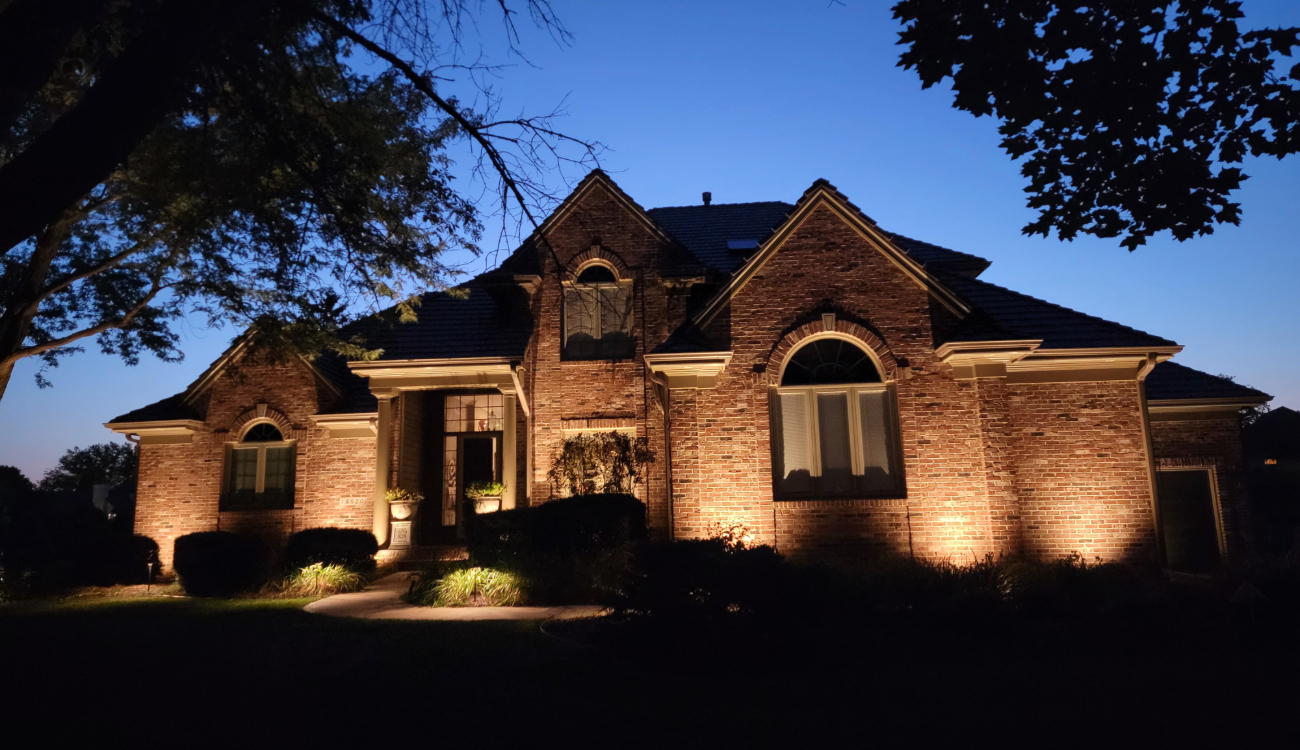
Frequently Asked Questions
How do I know if a quote is too cheap to be legitimate?
A legitimate quote is itemized, showing fixture types and quantities, wiring and conduit materials, labor, and any electrical work required. If a quote is far below others you have received and offers no breakdown, ask what is being left out. Often it is wire depth, fixture quality, or licensed electrical work.
What’s the real difference between a landscaper and a dedicated outdoor lighting company?
A landscaper may install lighting as an add-on service using standard fixtures and general placement. A dedicated lighting company carries specific credentials like AOLP or ILLI membership, builds a written design plan around your property, and understands regional installation factors like Omaha’s clay soil and freeze-thaw cycles.
Do I need a permit for outdoor lighting in Omaha?
Low-voltage landscape lighting typically does not require a permit, but any work tied into your home’s main electrical panel may. A licensed contractor will know the current requirement and handle it as part of the process rather than leaving it for you to figure out.
How does Nebraska’s clay soil actually affect an outdoor lighting installation?
Omaha’s clay-heavy soil expands when wet and freezes hard in winter, which can heave buried wire runs and shift staked fixtures over multiple seasons. Professional installers account for this with deeper wire burial, typically six to eight inches, weatherproof conduit in exposed runs, and hardware that resists frost movement.
What is the typical lifespan of a professionally installed system?
With proper installation and regular maintenance, a professional LED outdoor lighting system should perform reliably for fifteen to 25 years. Quality fixtures from established manufacturers hold up through many freeze-thaw cycles when installed correctly from the start.
Sum Up
Choosing the right outdoor lighting company in Omaha comes down to a short list of questions that are simple to ask but revealing in the answers. Ask about verifiable credentials, how they handle Omaha’s clay soil and winters specifically, for a written design plan, for an itemized quote, and what happens after they leave. A company that answers all of this clearly and backs it up with local, verifiable work is the one worth hiring.
Midwest Lightscaping has served Omaha and the surrounding communities since 2011. We hold AOLP and ILLI membership, carry BBB accreditation, and have won Best of Omaha every year since 2015. Owner Josh Reeves is personally involved in every project from the first consultation through final walkthrough, and our team handles design, installation, and ongoing maintenance under one roof.