
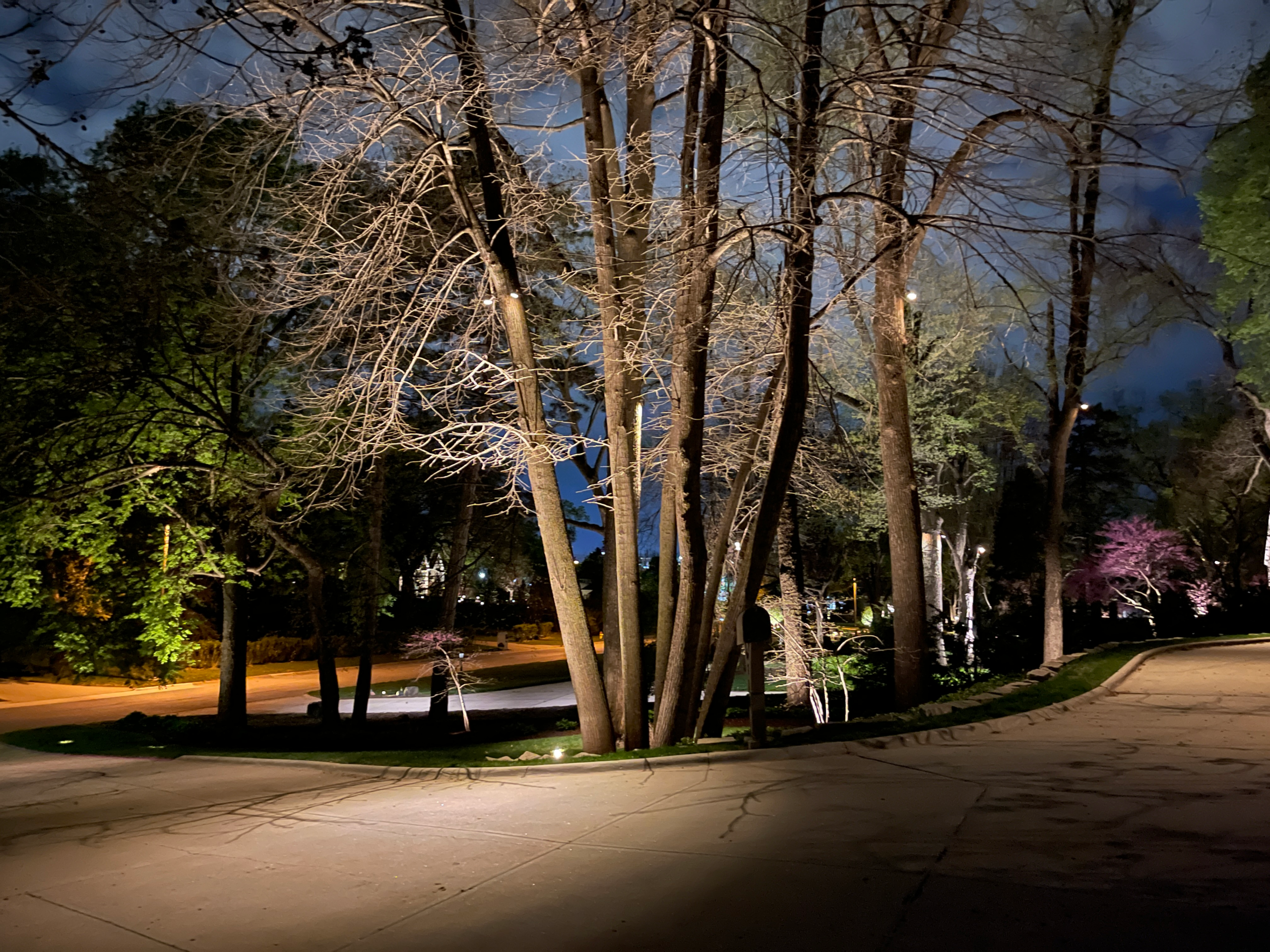
The driveway lighting ideas that do the most for curb appeal are staggered bollards along the edges, drive-over in-grade lights set flush in the pavement, a lit entry at the street, downlighting from the trees over the drive, uplighting on the trees and beds that frame it, soffit lighting on the garage, wall and step lights on sloped drives, and scheduled controls that bring it all up before anyone arrives. Security lighting keeps a property visible. These ideas make the approach to the house look designed.
A driveway is the first thing a guest sees, and in Omaha, they usually see it in the dark. The sun sets as early as 4:54 p.m. in December, so a home spends most of the winter being judged by its lighting.
These recommendations come out of the work Midwest Lightscaping has done since 2011, lighting driveways across Douglas, Sarpy, Washington, and Lancaster counties with a team carrying nearly 40 years of combined lighting and landscaping experience. The company has been voted Best of Omaha every year since 2015, holds a 5.0 Google rating, and belongs to the Association of Outdoor Lighting Professionals and the International Landscape Lighting Institute. Every idea below is designed and installed rather than assembled from a kit.
Driveway Lighting Ideas at a Glance
| Idea | Best for | Curb appeal effect | Omaha note |
| Staggered bollards | Long or curving drives | Defines both edges without a runway look | Set back from the plow and shovel path |
| Drive-over in-grade lights | Aprons, turnarounds, tight lots | Marks the pavement with no visible hardware | Sits flush, so a plow blade passes over |
| Lit entry at the street | Pillars, address markers, mailbox | Makes the driveway easy to find from the road | Address stays readable on dark winter evenings |
| Tree canopy downlighting | Tree-lined drives | Soft, natural light with branch shadows on the pavement | Fixtures sit high above snow and plows |
| Uplighting on trees and beds | Specimen trees, evergreens, grasses | Adds height and depth to the whole front yard | Evergreens hold the view through winter |
| Garage soffit lighting | Drives that end at the garage | Turns the largest facade surface into a lit destination | Under the overhang, clear of snow and salt |
| Wall and step lights | Sloped drives, retaining walls | Shows off stonework and grade changes | Marks slick slopes after dark |
| Scheduled and motion control | Every driveway | Lights are already on when a car turns in | Tracks sunset as it shifts through the year |
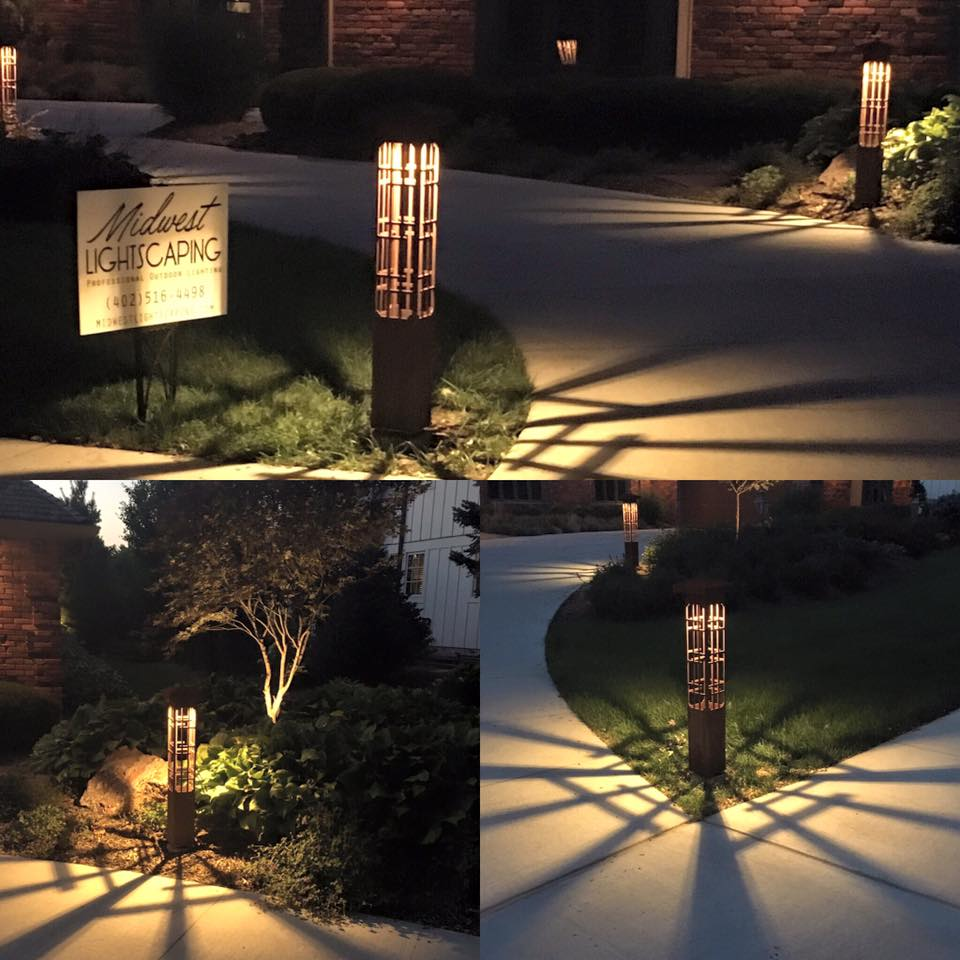
1. Staggered Bollards Along the Driveway Edges
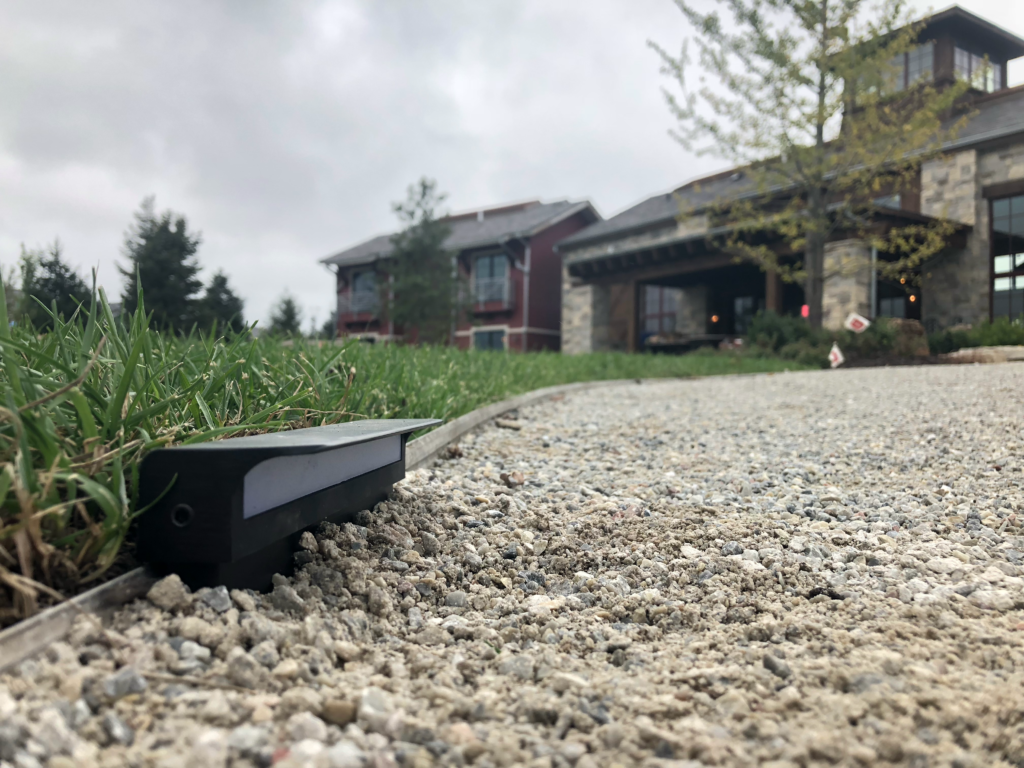
Bollards are short post fixtures, usually knee to waist height, that cast light down and outward to mark the edges of a drive.
Best for: long, curving, or narrow driveways where the pavement edge disappears at night.
Why Bollards Add Curb Appeal
- Alternating them from one side to the other defines the drive without the airport runway look of two matching rows.
- Pools of light guide drivers through curves and away from the lawn.
- The fixture itself reads as architecture, which suits both modern and traditional homes.
Bollard Notes for Omaha Driveways
Placement matters more than the fixture. A designer sets bollards a foot or two back from the pavement, past the reach of a plow blade, a shovel, and the arc a snowblower throws. A bollard at the curb line rarely survives a full Nebraska winter, and the ones set into a planting bed come through it untouched.
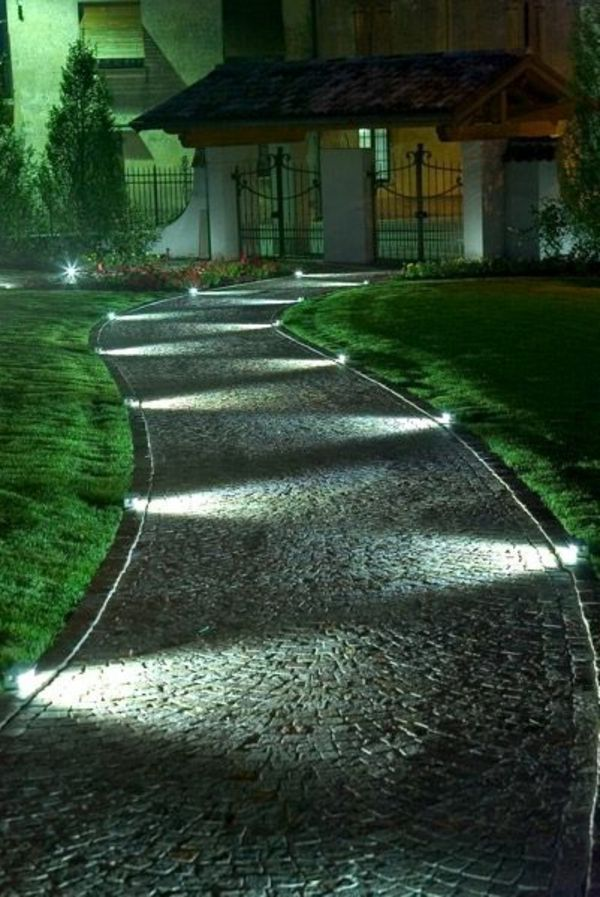
2. Drive-Over In-Grade Lights
In-grade lights, also called well lights or paver lights, mount flush with the driveway surface or the edging beside it. Drive-over rated versions carry the weight of a vehicle.
Best for: aprons, turnarounds, courtyard drives, and lots too tight for above-ground fixtures.
Why In-Grade Lights Add Curb Appeal
- The drive reads as a clean line of light with no hardware breaking the sightline during the day.
- Flush fixtures suit modern architecture where a row of posts would look fussy.
- They mark the pavement edge in spots where a mower, a car door, or a turning vehicle would knock a taller fixture over.
In-Grade Notes for Omaha Driveways
Sitting flush is the winter advantage. A plow blade or shovel passes straight over the lens instead of catching a post. In-grade fixtures do need drainage detailed correctly underneath so meltwater doesn’t pool in the housing and refreeze, which is a design and installation question rather than a product question.
3. A Lit Entry Where the Driveway Meets the Street
Entry lighting covers the pillars, stone marker, mailbox, and plantings at the mouth of the drive, often with a backlit address number that glows after dark.
Best for: the point where the driveway meets the road, especially on acreages and long setbacks.
Why a Lit Entry Adds Curb Appeal
- Guests and delivery drivers find the driveway on the first pass instead of the third.
- Lit pillars or plantings give the property a clear front edge from the road.
- A backlit address reads as deliberate, where brass numbers on brick vanish at night.
Entry Notes for Omaha Driveways
With sunset before 5 p.m. through much of the winter, a large share of arrivals happen in the dark from November into February. Backlit numbers stay legible when snow glare, low light, or a dark brick facade would swallow standard numbers, which also matters the night an ambulance is looking for the house.
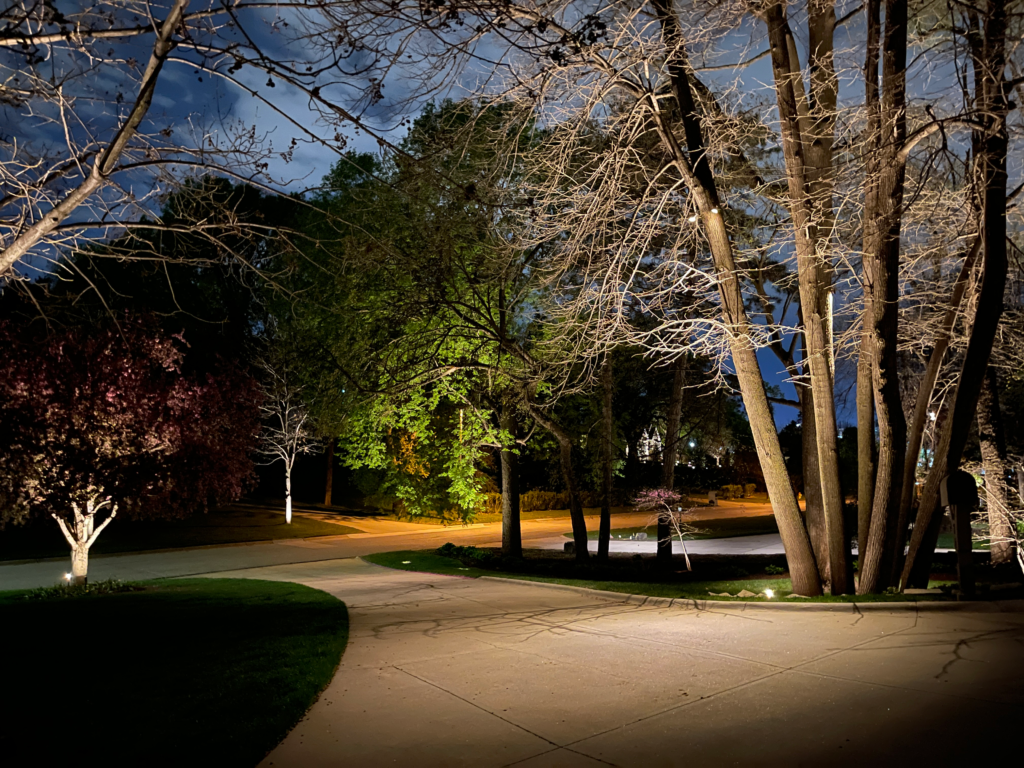
4. Downlighting From the Trees Over the Drive
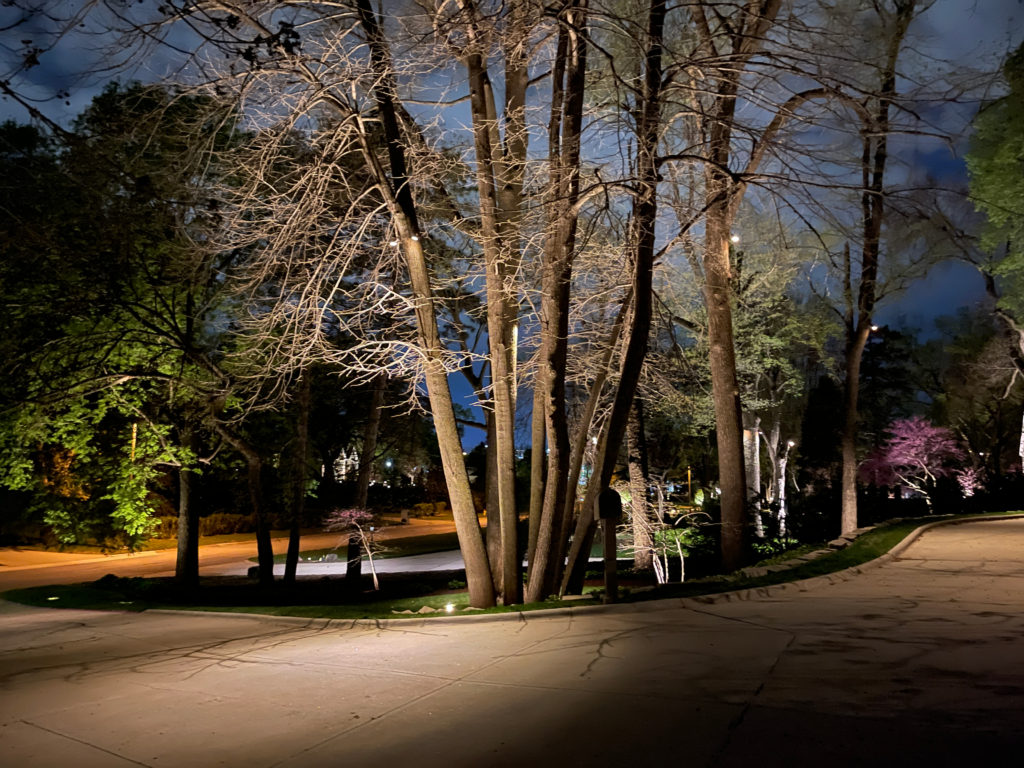
Downlighting, often called moonlighting, mounts fixtures high in mature trees and aims them down so light filters through the branches onto the pavement.
Best for: driveways lined with large oaks, maples, or other mature canopy trees.
Why Tree Downlighting Adds Curb Appeal
- Branch and leaf shadows fall across the pavement in a pattern that changes with the season.
- The hardware hides in the canopy, so the effect reads as ambient light rather than fixtures.
- A few well-placed fixtures light a long stretch of drive evenly with nothing at eye level to glare at a driver.
Tree Downlighting Notes for Omaha Driveways
Tree-mounted fixtures sit far above the snow line and out of reach of plows and snowblowers, which makes this the most durable option on a long drive. Mounting in a living tree calls for hardware and slack-wire techniques that allow years of growth, so it is work for a designer rather than an off-the-shelf kit.
5. Uplighting the Trees and Beds That Frame the Drive
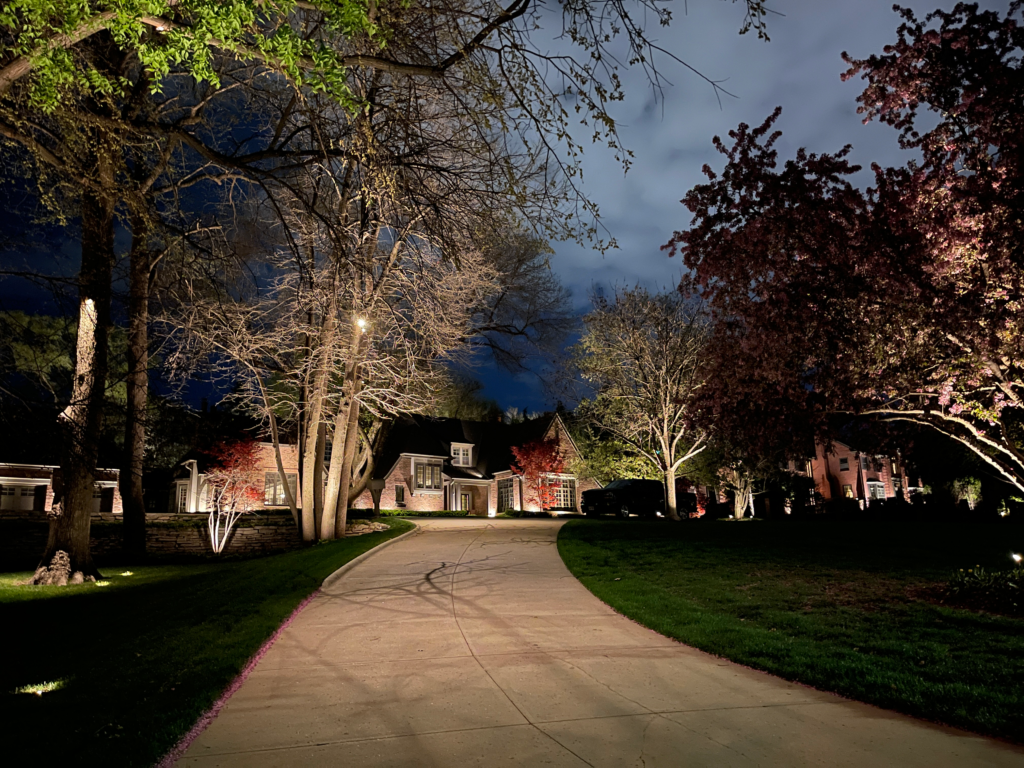
Uplighting places fixtures at the base of trees, shrubs, and ornamental plantings and aims them upward to light trunk, bark, and canopy.
Best for: specimen trees, evergreens, and ornamental grasses along the approach.
Why Uplighting Adds Curb Appeal
- Lit trees add height, so the front yard reads as larger and deeper at night.
- A few uplights frame the drive without lining it in fixtures.
- Bark texture and branching structure show up in ways daylight flattens out.
Uplighting Notes for Omaha Driveways
Evergreens such as spruce and pine hold their shape all winter, so an uplit evergreen keeps the approach looking finished when the deciduous trees are bare. Ground fixtures belong inside the planting beds rather than along the pavement, where plowed snow and road salt collect.
6. Soffit Lighting on the Garage
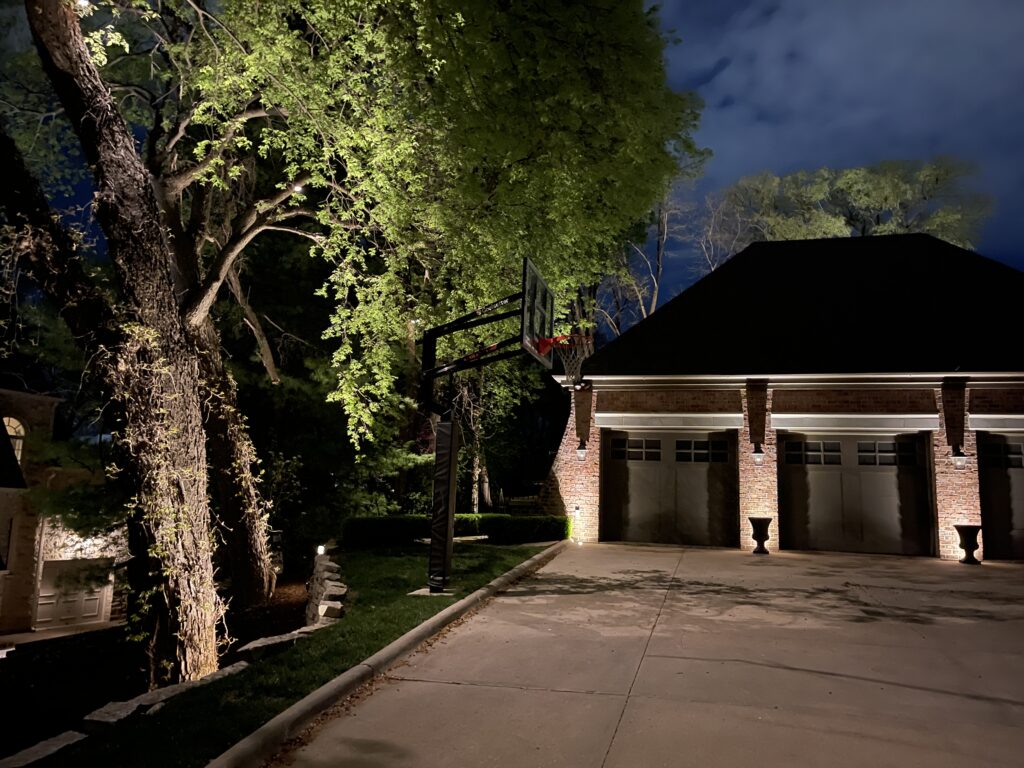
Soffit lighting mounts small downlights under the roof overhang above the garage, washing the doors and the facade below them.
Best for: driveways that end at an attached garage, which is most of them.
Why Garage Soffit Lighting Adds Curb Appeal
- Garage doors are usually the largest single surface on a front facade, and lighting them keeps that surface from reading as a dark hole at the end of the drive.
- The wash brings out stone, brick, and siding texture around the opening.
- The drive leads the eye to a lit destination instead of trailing off into shadow.
Soffit Notes for Omaha Driveways
Soffit fixtures sit under the overhang, out of the snow and away from the salt spray that comes off a plowed street, which makes them among the lowest-maintenance fixtures on a Nebraska property. They also throw usable light across the parking area without a single fixture in the pavement.
7. Wall and Step Lights on Sloped Driveways
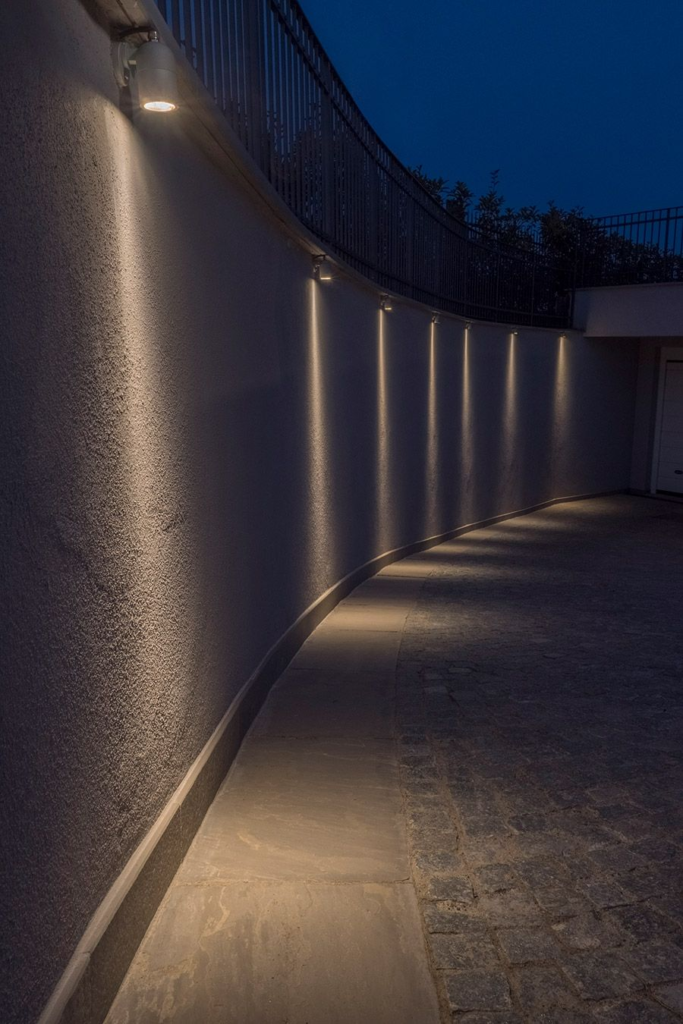
Wall and step lights are small fixtures recessed into retaining walls, stone borders, or the steps that connect a driveway to the front walk.
Best for: sloped drives, drives cut into a hill, and terraced entries.
Why Wall and Step Lights Add Curb Appeal
- Recessed fixtures show off stonework and retaining walls with no visible hardware.
- Lighting the grade change makes a sloped lot look intentional instead of awkward.
- The steps between the drive and the door read as part of one path rather than an afterthought.
Wall and Step Notes for Omaha Driveways
A sloped driveway ices over fast here, and lit walls and risers show exactly where the grade changes when the surface is white. Recessed fixtures also sit flush with the stone, so a shovel slides past instead of catching a housing.
8. Scheduled and Motion-Responsive Control
Control ties the driveway fixtures into one system that runs on an astronomical schedule, meaning it tracks sunset and sunrise through the year, with motion response where it helps.
Best for: every driveway, and especially households that come and go after dark.
Why Good Control Adds Curb Appeal
- The drive is already lit when a car turns in, rather than waiting on a sensor to catch up.
- Scenes let the approach sit soft on an ordinary evening and come up brighter for guests.
- The system shuts down on its own, so nothing burns all night by accident.
Control Notes for Omaha Driveways
Sunset in Omaha swings by roughly four hours between June and December, so a fixed clock timer leaves a drive dark for hours in one season and running late in the other. An astronomical schedule follows that swing without anyone touching it. Midwest Lightscaping’s Designer Package covers mobile app control, color-changing scenes, and home automation integration.
What Separates Driveway Lighting From the Rest of a Property
A driveway is the only part of a landscape people drive through, and that changes the design rules. Fixtures aim down and away from the approach, because a beam at windshield height blinds a driver at exactly the moment the drive narrows. Edge fixtures need enough spacing to overlap without becoming a runway, and the curves and grade changes need more light than the straight runs, since those are the places a car leaves the pavement.
The other difference is the pavement itself. Wire has to get across a driveway somehow, and after the concrete is down, that means cutting it. A conduit sleeve run under the drive before the pour costs very little and lets fixtures reach both sides for the life of the property. That single detail is the reason to bring a lighting designer in during a build or a driveway replacement rather than after.
Planning Driveway Lighting That Survives an Omaha Winter
Snow, plows, and deicing salt decide which driveway fixtures are still working in April. Chloride-based deicers such as rock salt corrode metals, and piled snow buries or shears anything sitting at the pavement edge.
A design built for this climate keeps ground fixtures out of the plow, snowblower, and shovel path, leans on high-mounted options like tree downlighting and soffit fixtures along the busiest stretches, and specifies fixture bodies and connections that hold up to salt exposure. Brass and copper fixtures cost more than aluminum and outlast it in a salted environment.
Every Midwest Lightscaping project starts with an on-site consultation, moves to a custom design, then installation, then ongoing outdoor lighting maintenance that checks aim and connections after each winter. On a new build or a driveway replacement, an outdoor lighting design done before the concrete is poured costs far less than cutting pavement later.
Choosing Light Color and Spacing for a Driveway
Warm white light between 2700K and 3000K suits residential driveways. It flatters brick, stone, and planting, and it keeps glare down for drivers. The American Medical Association encourages 3000K or lower for outdoor installations to limit glare, and cool blue-white light above 4000K makes a residential approach read like a commercial lot.
Spacing follows fixture output and driveway width rather than a fixed number. The goal is overlapping pools of light with no dark gaps between them, shielded so the light lands on pavement and plantings instead of in a driver’s eyes. A designer sets that spacing on site with the actual fixtures, because a bright bollard and a soft one covering the same drive land in very different places.
Frequently Asked Questions About Driveway Lighting
What are the best driveway lighting ideas for curb appeal?
The strongest combination is tree downlighting or uplighting over the approach, staggered bollards or in-grade lights defining the edges, and a lit entry at the street. Layering several soft sources makes the whole front of the property look finished, where a single bright fixture only lights one spot.
How do you light a driveway without a runway look?
Stagger the edge fixtures from one side of the drive to the other instead of running matched rows down both sides. Adding downlighting from trees or uplighting on nearby plantings spreads light more naturally and cuts the number of edge fixtures a drive needs.
What color light is best for driveway lighting?
Warm white between 2700K and 3000K works best on residential driveways. It complements brick, stone, and landscaping, and it produces less glare for drivers than cool white above 4000K.
How do driveway lights survive snowplows in Omaha?
Placement and fixture choice. Ground fixtures go a foot or two back from the pavement, past the plow, shovel, and snowblower path. In-grade lights sit flush so a blade passes over them, and high-mounted tree and soffit fixtures stay out of the way entirely.
Can lighting be added to an existing driveway?
Yes. Bollards, uplighting, tree downlighting, soffit lighting, and wall lights all work around an existing drive. The one constraint is getting wire across the pavement, which means either routing around it or cutting and patching, so a designer maps the wire routing before any fixture positions are final.
Do driveway lights need to be on a separate system from the rest of the yard?
No, and they work better on the same one. Running the driveway on the same transformer and control system as the landscape and facade lighting keeps the brightness consistent from the street to the front door, and gives the whole property one schedule instead of several.
Planning Driveway Lighting for Your Omaha Home
The driveway lighting ideas that add the most curb appeal are staggered bollards, drive-over in-grade lights, a lit entry at the street, tree canopy downlighting, uplighting on the trees and beds along the approach, garage soffit lighting, wall and step lights on sloped drives, and scheduled control across all of it. In Omaha, the right answer is whichever of those looks good on a December evening and still works after a winter of plows and salt.
A designer walks the drive after dark, watches how headlights and sightlines work on the approach, and maps fixture positions and wire routing around the snow path before anything gets installed. To plan residential outdoor lighting for your driveway and the rest of the property, call Midwest Lightscaping at (402) 509-2810 or email info@midwestlightscaping.com.