
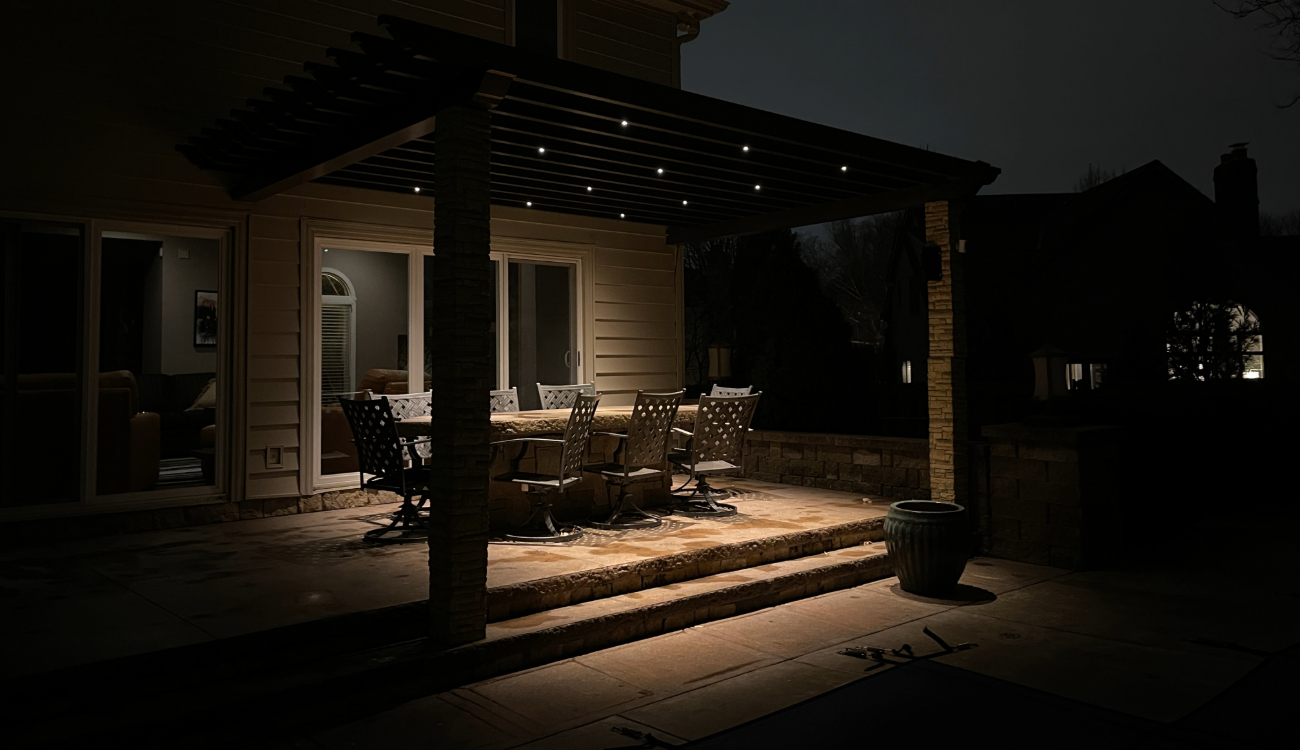
A patio comes alive after dark with the right mix of light. The right fixtures turn a plain concrete slab or deck into a space people actually want to linger in, whether it’s a quiet evening with coffee or a full backyard gathering. Midwest Lightscaping has been designing and installing outdoor living lighting across Omaha since 2011, and owner Josh Reeves is personally involved in every project from the first walkthrough to the final adjustment.
Quick Answer: The best patio lighting combines a few fixture types working together instead of relying on just one. String lights or a statement pendant provide ambient overhead coverage, wall sconces and lanterns warm up seating areas, path and step lights guide movement safely, and color-changing options add flexibility for game days and special occasions. Warm white light in the 2700K to 3000K range and durable fixtures in brass or copper make the difference between a setup that looks good for a season and one that lasts for years.
Key Patio Lighting Types at a Glance
Before diving into each idea, here’s a quick reference for what each fixture type does best.
| Fixture Type | Best For | Placement |
| String Lights | Ambient overhead glow | Draped across a pergola, posts, or railing |
| Pendant Lighting | A dining focal point | Centered over a table on a covered patio |
| Wall Sconces | Warm, intimate seating light | Mounted at eye or seating height |
| Post Cap Lights | Polished perimeter definition | Along railing posts |
| Lanterns | Flexible accent glow | Tables, steps, or hooks |
| Step and Deck Lights | Subtle safety lighting | Built into stair risers or deck boards |
| Path Lights | Safe walkway guidance | Evenly spaced along walkways |
Create a Cozy Canopy with String Lights
String lights are the easiest way to add warmth and coverage to a patio in one step. Draped across a pergola beam, strung post to post, or crisscrossed overhead for a canopy effect, they turn a bare patio ceiling into something inviting the moment the sun goes down.
Weather-resistant LED string lights hold up far better through a full Omaha season than standard incandescent sets, resisting moisture and temperature swings without dimming or failing early. For a layered look, pair them with a lower accent light so the space doesn’t rely on one flat overhead glow.

Frame the Dining Table with a Statement Pendant
For patios with a covered structure, a large-scale pendant hung above the dining table creates a real focal point instead of scattered light with no center. The heavier metal frames typical of outdoor pendants stand up to wind and weather while giving the space a finished, intentional look rather than a string of lights strung as an afterthought.
This works especially well when the rest of the patio uses simpler accent lighting, letting the pendant do the visual work over the table while everything else stays supportive.
Warm Up Your Seating Area with Wall Sconces
Wall sconces placed at seating height bring a warmer, more intimate feel to a lounge or conversation area than overhead lighting alone. Whether mounted on the house wall, a column, or a privacy screen, sconces cast a softer glow that invites people to settle in rather than a bright, flat wash of light.
Dimmable sconces give you the most flexibility, letting the same fixture handle a lively gathering and a quiet evening without needing two different setups.
Give the Perimeter a Polished Edge with Post Cap Lights
Post cap lights sit on top of railing posts and outline the edge of a deck or patio with a clean, finished look. Beyond the visual polish, they add a subtle layer of visibility along the perimeter, useful on multi-level patios or decks where the edge isn’t always obvious at night.
They come in finishes like brushed bronze or matte black to match whatever hardware and railing style the rest of the patio already uses, so they read as part of the design rather than an add-on.
Add Movable Charm with Lanterns
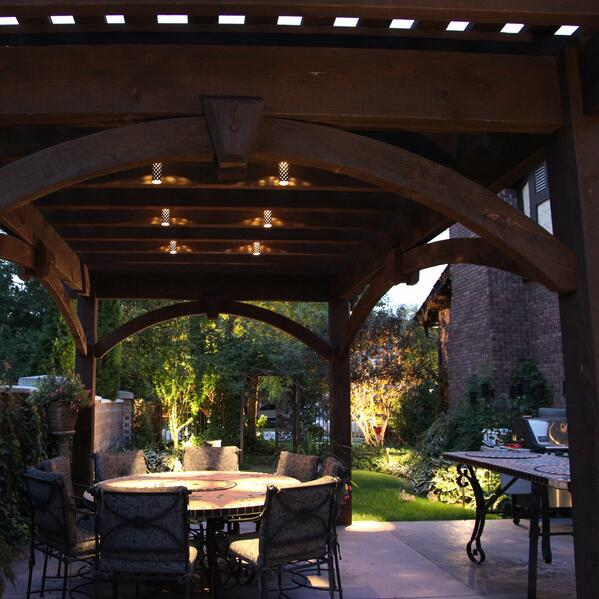
Lanterns are one of the most flexible pieces in patio lighting because they don’t need to be mounted anywhere permanent. Set on a side table, hung from a hook, or lined along a set of steps, they add a warm, old-world charm and can be rearranged any time the layout of a gathering changes.
Battery-powered or rechargeable lanterns offer the most flexibility for moving them around as needed, while still holding up fine outdoors for the length of a season.
Light the Steps and Deck Boards Quietly
Recessed lights built into deck boards, stair risers, or railings provide safety without visual clutter. They sit flush with the surface, so during the day they’re barely noticeable, and at night they light exactly where feet need to land without throwing glare across the rest of the patio.
This is one of the most overlooked upgrades on a patio, since it solves a genuine safety issue- uneven footing on stairs after dark- without adding another visible fixture to the design.
Guide the Way with Path Lights
Path lights connect a patio to the rest of the yard, guiding guests safely from the driveway or side gate to the gathering space. Evenly spaced fixtures along both sides of a walkway give balanced light without dark gaps, and downward-facing fixtures avoid glare while still highlighting nearby plants or garden beds along the way.
This is also where a well-planned patio lighting system starts to blend into the rest of a property’s landscape lighting, rather than existing as a separate, disconnected feature.
Bring in Color for Game Days and Special Occasions
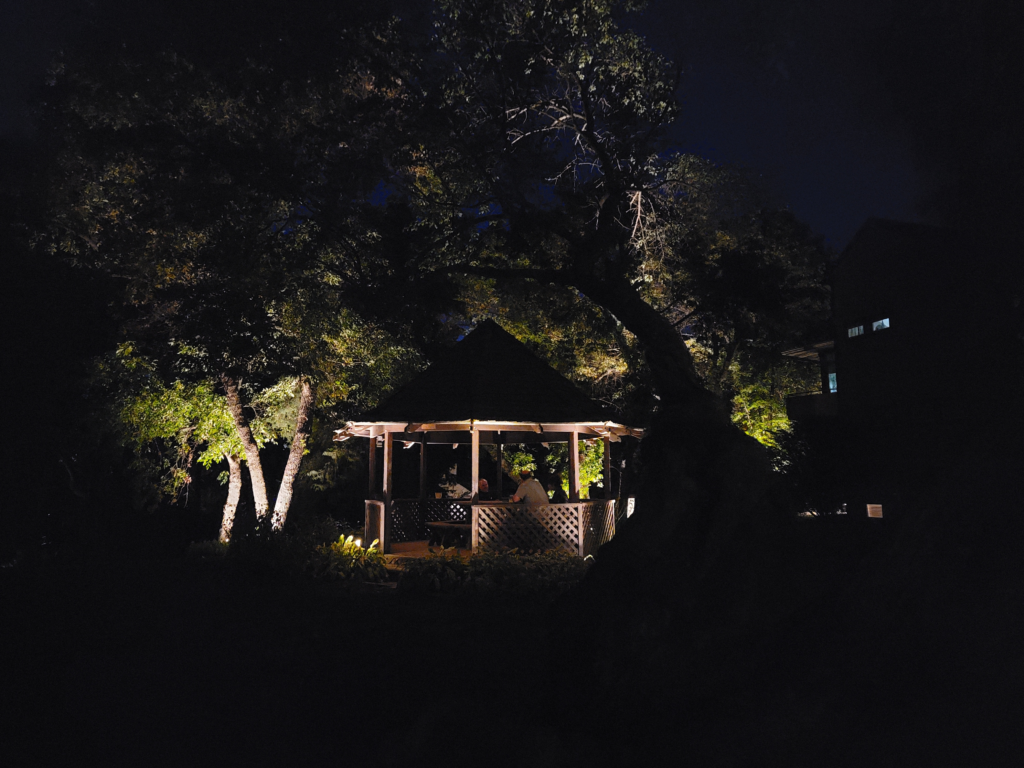
Color-changing lighting adds a level of flexibility that fixed white fixtures simply can’t match. Set the patio to Husker red on a fall Saturday, a festive color palette for a birthday, or a seasonal look for the holidays, then switch back to a warm white default with a single tap on an app.
This is where smart lighting earns its keep for actual entertaining. Instead of manually adjusting bulbs or swapping fixtures for an occasion, the whole patio can shift its look in seconds, and shift back just as easily once the occasion has passed.
Pair Lighting with a Fire Feature to Stretch the Season
Good lighting extends more than the hours a patio gets used; it can extend the months. In Omaha, the comfortable outdoor season is shorter than in much of the country, which makes stretching it worth the effort.
Pairing warm-toned lighting with a fire feature, whether a fire pit, a fireplace, or a patio heater, keeps a space usable well into cooler spring and fall evenings instead of just the peak of summer. The visible warmth of a flame paired with warm white lighting reinforces the same cozy feeling rather than working against it, so the patio still feels inviting even once temperatures drop.
Curious what this looks like paired with your own patio layout? Schedule your consultation, and we’ll walk through options together.
Choose Fixtures That Actually Hold Up
A patio takes more direct wear than lighting tucked into a garden bed: more foot traffic, more contact, more exposure to grill heat and grease near a cooking area. Fixture material makes a real difference here.
Brass and copper fixtures typically last 20 years or more, resisting corrosion and holding up well through repeated temperature swings. Cast aluminum lands in the middle, usually 10 to 15 years before cracking or corrosion sets in. Plastic and composite fixtures are the least durable choice, often needing replacement within 1 to 3 years, especially with direct sun exposure.
Spending a bit more upfront on brass or copper fixtures for a patio setup usually costs less over time than replacing a plastic fixture every couple of seasons.
Frequently Asked Questions
How much does patio lighting typically cost?
Costs vary depending on the type and scale of the setup, but most residential patio lighting projects fall somewhere between $500 and $2,500, depending on the number of fixtures and complexity of installation.
Are solar patio lights a good option?
Solar lights work reasonably well, especially in areas with consistent direct sunlight, but they tend to be dimmer than wired options and depend on regular sun exposure to stay charged, which can be inconsistent through Omaha’s shorter winter days.
What’s the most durable fixture material for a patio?
Brass and copper fixtures are the most durable and corrosion-resistant, often lasting 20 years or more. Plastic-coated fixtures are more budget-friendly upfront but tend to warp or crack over time, especially with exposure to sun and temperature.
How can I make my patio lighting more energy efficient?
Use LED bulbs throughout, since they use significantly less energy and last far longer than older bulb types. Motion sensors or smart timers add further savings by only running lights when they’re actually needed.
Conclusion
The best patio lighting setups layer a few of these ideas together rather than relying on just one. String lights or a statement pendant for ambient coverage, sconces and lanterns for warmth, path and step lights for safety, and color-changing options for flexibility all work together to make a patio genuinely usable after dark, not just decorated for a photo.
Midwest Lightscaping has designed and installed outdoor living lighting across Omaha and the surrounding area since 2011. We build every patio system around durable brass and copper fixtures, warm and inviting color temperatures, and smart controls that make entertaining easier. Owner Josh Reeves is personally involved in every project from the first conversation through the final walkthrough.