
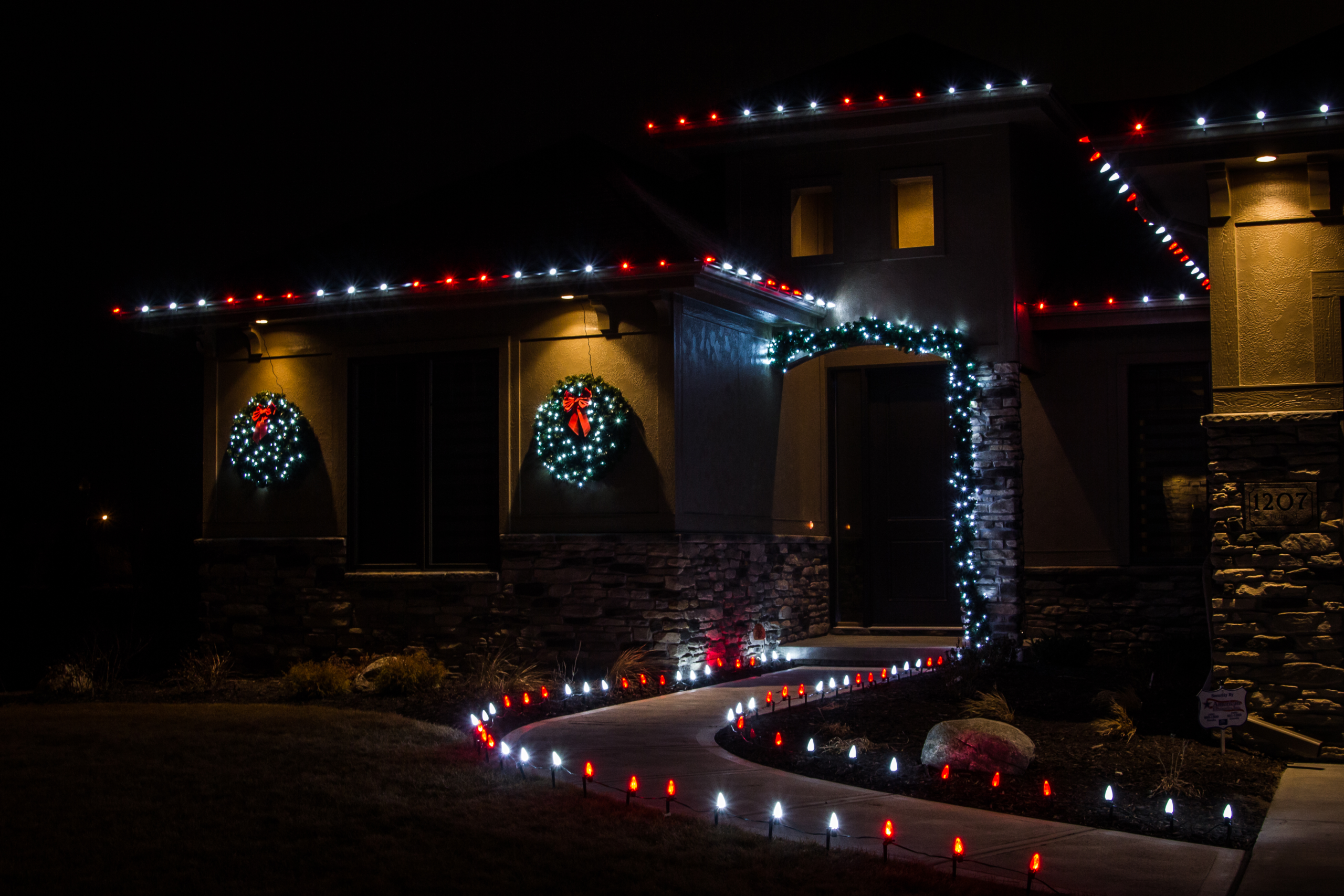
Permanent roofline lighting is installed once and remains on the home year-round, controlled from an app. Seasonal holiday light installation is applied each fall and removed in January. The right choice depends on how long you intend to own the home and how much you want the display to evolve from year to year.
Midwest Lightscaping designs and installs both. Our recommendation is based on the home’s architecture, the condition of the roof, and how the property will be used, not on any preferred product. We have designed and serviced residential and commercial properties since 2011, and our team brings nearly 40 years of combined outdoor lighting and landscaping experience in Nebraska. Maintaining both types of systems through Nebraska winters has given us a clear understanding of how each performs over time.
Permanent Roofline Lighting vs Seasonal Lighting Side by Side Comparison
| Component | Permanent roofline lighting | Seasonal holiday installation |
|---|---|---|
| Installed | Once | Every fall |
| Removed | Never | Every January |
| Storage required | None | Storage for strands, clips, and cords |
| Roof access | One installation | Installation and removal each year |
| Control | App with saved colors and schedules | Timer or outdoor outlet |
| Use | Any holiday, plus everyday architectural lighting | One season |
| Design flexibility | Fixed to the track placement | Fully redesigned each year |
Seasonal Holiday Light Installation
A professional crew installs commercial-grade strands along your roofline, trees, and any other features you wish to illuminate. The crew services the display throughout the season, then removes and stores the lighting after the holidays.
Nothing remains on the home between seasons, and each year offers an opportunity to redesign the display from the beginning.
Appearance by Day and Night
Seasonal installations typically use C9 strands, the larger, traditional-style bulbs spaced further apart. From the street, they create a bold, classic holiday outline and are the look most associated with a professionally lit home.
The trade-off appears in daylight. Bulbs, clips, and cords remain visible along the roofline throughout the season, which is the primary reason some homeowners consider a permanent system.
Scheduling and Storage
The installation window is narrow. Lighting is installed in late October or November, while roof conditions remain safe, and removed in January, typically the coldest month of the year. Severe weather can delay either visit.
We recommend reserving your installation date early. December calendars fill well before Thanksgiving, and the preferred dates are taken first. Booking in late summer or early fall allows a choice of dates.
Confirm in writing who stores the lighting between seasons. Some companies store and reinstall the same strands each year. Others return them to the homeowner, who must then provide suitable storage.
Roof work is the principal risk of seasonal installation. The U.S. Consumer Product Safety Commission has estimated 14,700 emergency room visits from holiday decorating in a single November and December, with falls the leading cause at 41%.
Limitations of Seasonal Installation
- Crews access the roof twice every year, for installation and removal.
- The display serves one season out of twelve.
- Strands, clips, and cords require storage unless the installer provides it.
- Scheduling depends on weather, and December dates fill early.
Seasonal installation remains the appropriate choice for many homes. We recommend it for homeowners who are not yet certain they want permanent hardware on the property.
Permanent Roofline Lighting
A slim aluminum track is fitted along the roof edge, with individually controlled LED bulbs seated inside it. The track is cut and shaped to follow the roof, including gables, dormers, and valleys.
The system is controlled from your phone. You select colors, patterns, brightness, and schedules, and most homeowners leave it on warm white for everyday use. Each of our permanent installations includes a walkthrough of the app so that the full range of the system is understood and used.
If your internet connection is interrupted, the system continues to operate. The saved schedule runs on the controller, so the lights follow their normal timing. Only changes to colors or patterns from the app are unavailable until service is restored.

Appearance by Day and Night
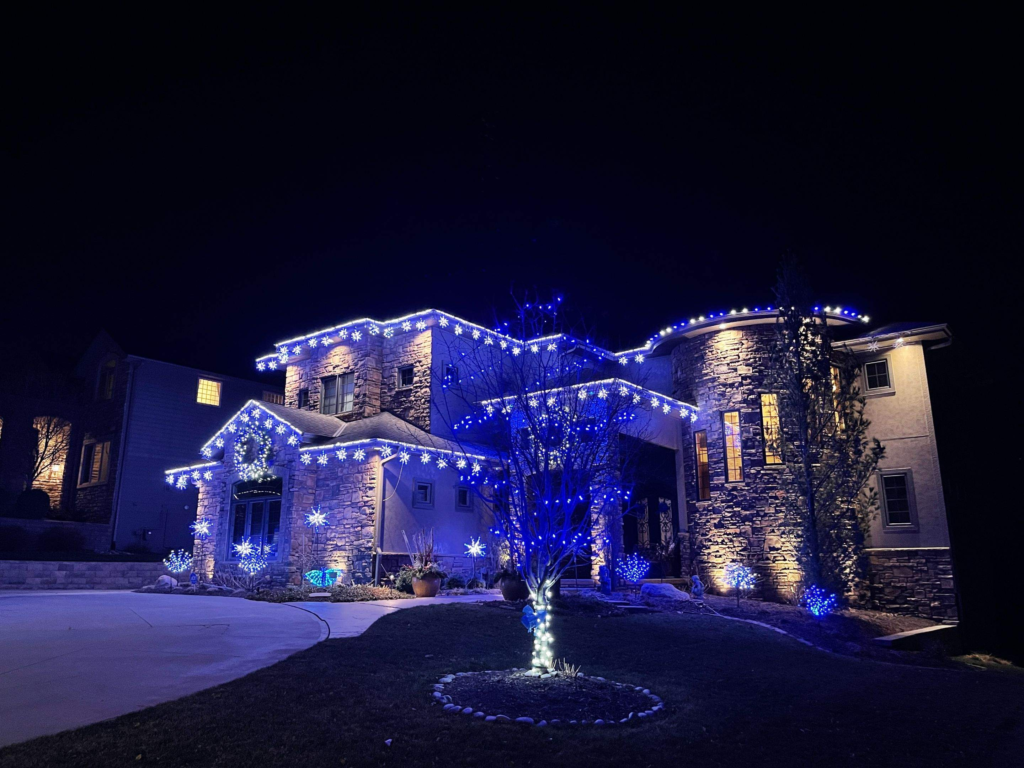
The bulbs are smaller and more closely spaced than C9 strands, producing a cleaner, more even, and more contemporary line. The result approaches the traditional holiday look without matching it exactly.
In daylight, the track is visible on close inspection. It is color-matched to the fascia or trim, so from the street it reads as part of the roofline rather than as a lighting fixture.
Performance in a Nebraska Winter
The crew accesses your roof once. After installation, the hardware must perform on its own through repeated freezing and thawing, snow sliding from the roof, and occasional hail.
In this climate, the quality of the track, fasteners, and wiring is especially important. Before you proceed with any installer, ask what their hardware is rated for and how their warranty addresses weather damage.
Installation scheduling is more flexible than many homeowners expect, since the work takes place on the roof rather than in the ground. Ice or snow on the roof will halt work for safety reasons, so fall and spring are the most reliable seasons. A system installed in fall is operational for its first holiday season.
Maintenance is minimal but not nonexistent. Bulbs eventually fail, fasteners can loosen after repeated freezing and thawing, and controllers occasionally require service. An annual inspection identifies these items before they become visible gaps in the roofline during the holidays.
Limitations of Permanent Roofline Lighting
- The track is fixed in place, so the layout cannot be changed later.
- It covers the roof edge only. Trees, wreaths, garland, and columns are not included.
- A roof replacement requires the track to be removed and reinstalled.
Roof replacement deserves specific discussion before installation. Confirm who removes and reinstalls the track, and whether that work is part of the installer’s service. If your roof is within a few years of replacement, the better sequence is to replace the roof first and install the lighting afterward. We would rather advise you to wait a year than install a system that must be removed the following summer.
Roofline Lighting as Part of a Complete Design
Roofline lighting defines the architecture of the home. It does not illuminate the landscape, entry, or walkways below, and on its own it leaves a bright outline above an unlit property.
A complete lighting design considers the property as a whole: the trees, planting beds, paths, and architectural features beneath the roofline. On properties where we design both, we place the roofline and landscape lighting on a single schedule, so the home and its surroundings are illuminated together and the result appears intentional from every approach. For more on this, see our residential outdoor lighting services.
Considerations Before Installation
Three items should be confirmed before you proceed:
- HOA requirements. Some associations treat permanent lighting as an exterior modification requiring approval, and a few restrict colors or hours of operation. Confirming this in advance avoids complications later.
- Home insurance. Policies vary for items permanently attached to the home. Please consult your insurer directly.
- Resale. The effect depends on the buyer. Some view permanent lighting as a desirable feature, while others prefer not to inherit it.
Which Option Suits Your Home
Permanent roofline lighting is the stronger choice if you:
- Plan to remain in the home for several years
- Want the home illuminated year-round, not for a few weeks each winter
- Prefer to eliminate annual scheduling and roof access
- Have a roof with substantial remaining life

Seasonal holiday installation is the stronger choice if you:
- May relocate within the next few years
- Prefer a new design each season
- Have a roof nearing replacement
- Specifically want the bold, traditional C9 outline
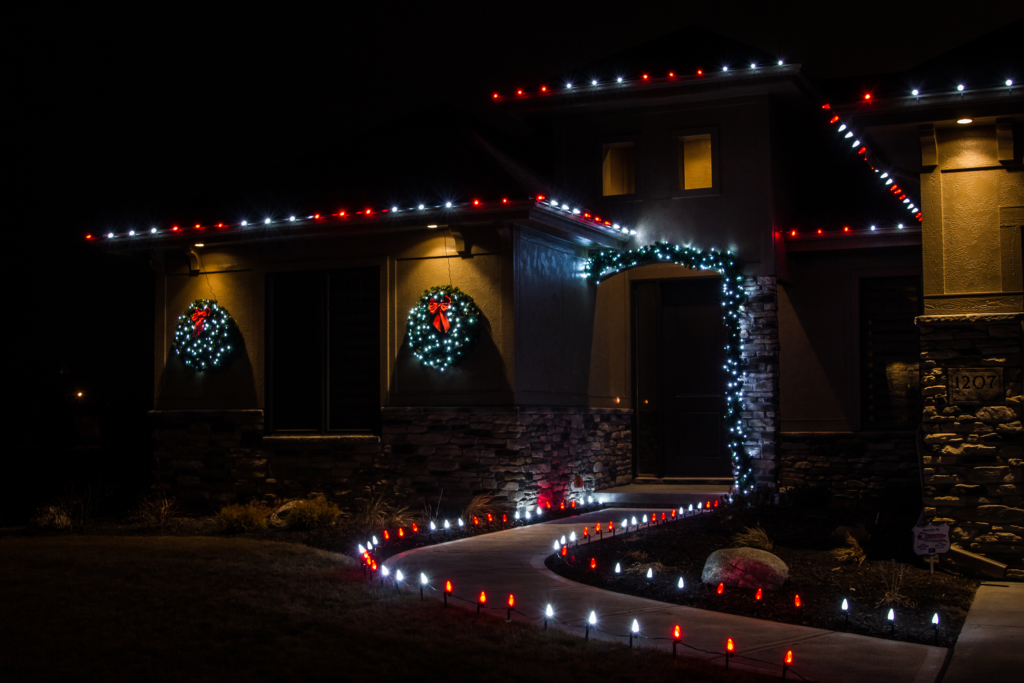
A third approach is often the most complete. Many homeowners install permanent roofline lighting and retain seasonal service for wrapped trees, wreaths, and garland, which a roof-mounted track cannot provide. On the properties we light, this combination is more common than either option alone.
Choosing Between Permanent and Seasonal Holiday Lighting
Permanent roofline lighting is well suited to homeowners who intend to stay and want the home illuminated all year. Seasonal installation is well suited to those who prefer a new design each season or are not ready to place hardware on the home. Neither is superior in every case. The right answer depends on the architecture, the roof, and your plans for the property.
The most effective next step is an on-site consultation, in which we evaluate your roofline and show you how each option would appear on your home. Contact Midwest Lightscaping at (402) 509-2810 or info@midwestlightscaping.com.